【本問題】次の日本文を英訳して下さい。
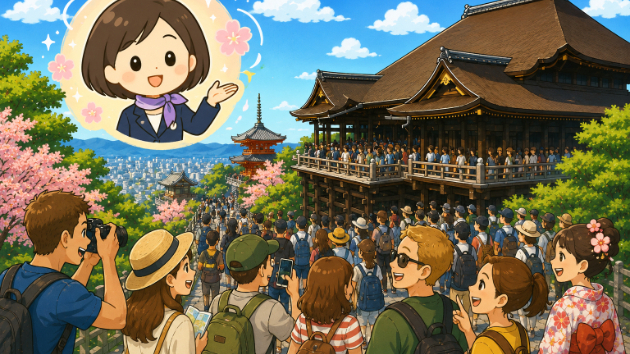
1、アメリカからきた友人に、「こちらへ来てからまだ本当に美しい着物姿の娘に会ったことが無い。どこへ行ったら見られるか」と聞かれて、どう答えていいか困った。
(ヒント)「返事に困る」=be at a loss for an answer。
(解答例)I was at a loss for an answer when my American friend said, “I haven’t seen a really beautiful girl in kimono since I came over here. Tell me where I can find one.”
2、あいつが「実を言うと」と言う時はいつも、私はあいつはウソを言おうとしているな、と思う。
(ヒント)「~と思う」=suspect。
(解答例)When he says “to tell the truth”, I always suspect that he is
going to tell a lie.
3、随分雨が降りましたね。後2日降れば、10日降ったことになります。
(ヒント)未来完了形を使います。
(解答例)We’ve had enough rain, haven’t we? It will have rained just
ten days the day after tomorrow (あるいはThis rain will have lasted ten days・・・).
4、我々は大樹の下でしばらく休んでいた。突然、隊長が叫んだ。「雨が上がったぞ。さあ、出かけよう。」
(ヒント)「隊長」=the team leader, the team captain。
(解答例)We were taking a good rest under a big tree, when the team captain shouted suddenly, “It’s just stopped (raining). Let’s get going.”
5、夏期休暇を利用してワシントン市を訪れ、1週間滞在した。その期間、首都の内外を見物して回った。
(ヒント)「利用して」はtaking advantage of (あるいはavailing myself
of)~、または「~休暇中」と考えます。
(解答例)During the summer vacation (あるいはTaking advantage of
my summer vacation), I visited Washington, D.C. and stayed there for a week, making sightseeing trips in and around the capital.
6、今はスピード時代だ。速ければ速いほどいい。この意味では新聞の使命はもう終わったと言えるだろう。
(ヒント)「新聞の使命」=the mission of the newspapers、「終わる」=
is gone
(解答例)This is the age of “Speed First.” In this sense, the mission of
the newspapers is gone for good and all (あるいはforever).
7、日本人は語学に弱いというのは周知の事実である。例えば、国際会議などで自由に発言できる日本人は極めてまれである。
(ヒント)「語学に弱い」=have a little linguistic ability、「自由に発言する」=express oneself well。
(解答例)It is a well-known fact that the Japanese have little linguistic ability (あるいはare weak at foreign languages). In international
conferences, for example, few Japanese can express themselves well.
8、それから5年経った。彼女は夫の帰りを一日千秋の思いで待っていたが、彼からは何の便りも無かった。
(解答例)Five years had passed. She had been waiting impatiently for her husband to come back, but in vain. She had heard nothing from
him.
9、彼の下宿のおかみは愛想がいいので、若い者がたくさん集まった。僕なんかよく彼の部屋で夕飯をご馳走になった。
(ヒント)「愛想のよい」=engaging、「ごちそうになる」=have supper served。
(解答例)The landlady of his boarding house was so engaging (あるいはcharming) that his young friends were always calling. As for me, I
often had supper served in his room.
10、学生にとって辞書は、ちょうど航海者にとっての羅針盤みたいなものだ。熟練した船長でも完全な羅針盤無しには大洋を渡航はできない。
(ヒント)「航海者」=a navigator、「羅針盤」=a compass、「熟練した船長」=a veteran sea captain。
(解答例)A dictionary is to the student what a compass is to the
navigator. Even a veteran (あるいはan experienced) sea captain can
hardly be expected to sail across the ocean without a perfect compass.
【練習問題】次の日本文を英訳して下さい。
<商店での会話>
1、「他に何かいりますか。」「それだけで結構です。」
(解答例)①”Anything else?” ”That’s all.”
②”Is that the lot?” ”Yes, thanks.”
(解説)このThat’s all.は「それが全てです」の意です。
<道路での会話>
2、あのー、郵便局へ行く道を教えていただけませんか。
(解答例)①Excuse me, but can you tell me the way to the post office?
②Excuse me, could you tell me how to get to the post office?
(解説)見知らぬ人に話しかける時は、Excuse me.とまず言います。この場合の「教える」はteachではなく、tellです。
3、私もこの辺はよく知らないのです。
(解答例)①I’m a stranger here myself.
②I’m new here as well.
(解説)この場合のstrangerは「不案内な人」の意です。
4、この辺の地理はよく知っています。
(解答例)①I know my way around here.
②I’m familiar with this area.
(解説)know one’s way around~は「~に精通している」の意で、土地について言えば、「地理に明るい」ということです。
5、ここから博物館までどれくらいありますか?
(解答例)①How far is it from here to the museum?
②How long would it take to get to the museum from here?
(解説)距離について言う場合、farは疑問文・否定文に用いられます。