Merry Christmas!
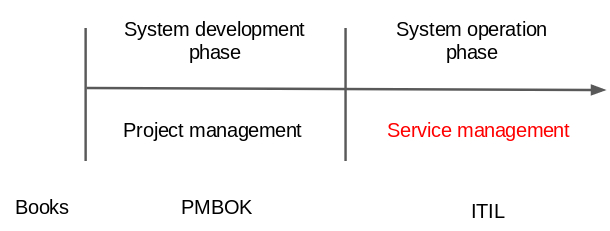
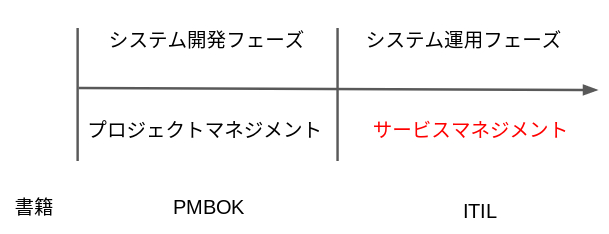
This year is nearing its end, but today I would like to talk about ITIL. It is good
to know because of that it may be asked in the Fundamental Information
Technology Engineer Examination.
(1)What is a ITIL?
Most of the IT costs of a typical company or organization are spent
maintaining existing systems. ITIL (Information Technology Infrastructure
Library) has attracted attention because it regards IT operation, which is an
important corporate activity, as an "IT service" and provides methodologies.
ITIL are the books that summarizes successful cases in IT service
management, and has become the de facto standard in the operation
management of IT systems.
■ITIL's three concepts
①It continuously adapts IT services to the needs of the business and
customers.
②It improves the quality of providing IT service.
③It will reduce the cost of providing IT services in the medium to long term.
(2)About ITIL version
Since the first edition in the 1980s, ITIL has been reorganized and revised as
a version-2 (ITIL V2) from 2000 to 2001. In 2007, ITIL Version-3 (ITIL V3) was
introduced.
This time, I will focus on ITIL V2. At the heart of ITIL V2 are two books:
Service Support and Service Delivery.
(3)Service Support
Service Support describes techniques to help you use your IT services
properly. Service support consists of a service desk and five processes.
①Service desk
It is a help desk for responding to inquiries from users. It will be the first
point of contact for all IT related issues. If you compare it to a hotel,
it's like a concierge in the lobby or a front desk.
②Incident management
Incident management strives to restore normal service operations as
quickly as possible in the event of an IT service incident. The goal is
to maintain quality of service by minimizing service downtime and
business impact.
③Trouble management
Trouble management focuses on identifying and eliminating the underlying
factor to prevent recurrence.
④Configuration management
"Configuration" is a component required for an IT service, specifically
a personal computer, software, network, manual, etc. Configuration
management is the process of accurately managing this configuration
information and controlling it to prevent exceptions.
⑤Change management
In change management, we accept change requests for solutions revealed
by trouble management and configuration changes required according to
the life cycle, and carry out activities to evaluate and implement them.
⑥Release management
Release management is the process of ensuring that the change work
determined by change management is carried out.
This service support may be easier to understand if you compare it to a taxi.
The taxi driver is the service desk. And the taxi service is to "carry a customer
and move to the destination."
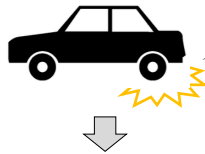
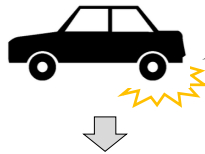
①Suppose you have a flat tire while driving a taxi.
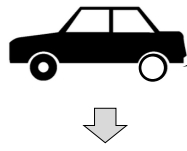
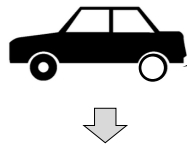
②The driver will replace it with a spare tire. (= Incident management)
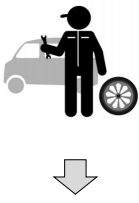
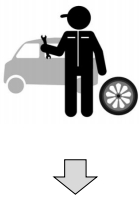
③The cause of the flat tire was investigated at the maintenance shop, and
it turned out to be a nail. (= Trouble management)
④Have a flat tire repaired. (= Change management)
⑤Replace the repaired tire with the spare tire. (= Release management)
(4)Service Delivery
Service Delivery is the process of planning and improving IT services over the
medium to long term. It consists of five processes, and stable IT services are
provided by implementing these processes.
①Service level management
This is a quality assurance process. We conclude SLA and review the
contents of SLA on a regular basis.
②Availability management
This is the process of building a mechanism to ensure that IT services
based on SLA can be executed.
③Capacity management
This is the process of managing your budget and cost-effectiveness to
develop services that meet your performance requirements.
④IT service financial management
This is the process of managing the costs required for the IT services you
provide, and calculating and collecting revenue.
⑤IT service continuity management
This is a process that aims to prevent IT services from stopping even in the
event of a disaster such as an earthquake or fire, or to minimize damage
and impact even if they do.
[Japanese]
メリークリスマス!
今年も終わりに近づいてきましたが、今日はITILについて解説しようと思います。基本情報技術者試験に出題されることもありますので、知っておくと良いでしょう。
(1)ITILとは?
一般的な企業や組織におけるITコストの大半が、既存システムの維持のために費やされています。この重要な企業活動であるIT運用を「ITサービス」としてとらえ、方法論を提供していることで注目が集まってきたのが
ITIL(Information Technology Infrastructure Library)です。
ITIL は、ITサービスマネジメントにおける成功事例をまとめた書籍群であり、
ITシステムの運用管理におけるデファクトスタンダード(= 標準)になっています。
■ITIL の3つのコンセプト
①ITサービスをビジネス及びその顧客ニーズに対して継続的に適合させる。
②ITサービス提供における品質を改善させる。
③ITサービス提供にかかるコストを中長期的に低減させる。
(2)ITILのバージョン
ITIL は1980年代の初版以降、2000〜2001年に書籍群の整理・改訂が行われ、
Version-2(ITIL V2)として再構成されました。また、2007年には
ITIL Version-3(ITIL V3)が登場しました。
今回はITIL V2に焦点を当てて解説します。ITIL V2で中心となるのは、
サービスサポートとサービスデリバリの 2 つの書籍です。
(3)サービスサポート
サービスサポートでは、利用者が IT サービスを適切に利用できるように
サポートするための手法を解説しています。サービスサポートは、
サービスデスクと5つのプロセスで構成されています。
①サービスデスク
利用者からの問い合わせに対応するための窓口のことです。ITに関連した
全ての問題の最初の連絡窓口になります。ホテルに例えると、ロビーの
コンシェルジュもしくはフロントデスクのような存在です。
②インシデント管理
インシデント管理では、ITサービスにインシデントが発生した場合に、
可能な限り迅速に通常のサービス運用の回復に努めます。サービスの
中断時間やビジネスへの影響を最小限に抑え、サービスの品質を維持する
ことが目的です。
③問題管理
問題管理では、再発防止のための根本原因を突き止め、排除することに
重点が置かれています。
④構成管理
「構成(Configuration)」とは、ITサービスに必要な構成要素のことで、
具体的にはパソコン、ソフトウェア、ネットワーク、マニュアルなどです。
構成管理は、これらの構成情報を正確に管理し、例外使用させないために
コントロールするプロセスです。
⑤変更管理
変更管理では、問題管理によって明らかになった解決策や、ライフサイクル
に応じて必要になった構成の変更などについての変更要求を受け付け、
それらを評価、実施していくための活動を行います。
⑥リリース管理
リリース管理は、変更管理で決定した変更作業を確実に実施するための
プロセスです。
このサービスサポートは、タクシーに例えると理解しやすいかもしれません。
タクシードライバーがサービスデスクで、「顧客を乗せて目的地へ移動する」のがタクシーのサービスになります。
①タクシーを運転中、タイヤがパンクしたとします。
②運転手はスペアタイヤに交換します。(=インシデント管理)
③整備工場でパンクの原因を調べてもらい、釘だと判明。(=問題管理)
④パンクしたタイヤを修理してもらいます。(=変更管理)
⑤修理されたタイヤとスペアタイヤを交換します。(=リリース管理)
(4)サービスデリバリ
サービスデリバリとは、ITサービスを中長期的に計画・改善するためのプロセスのことです。サービスデリバリは、5つのプロセスで構成され、これらのプロセスを実施することで、安定した ITサービスを提供します。
①サービスレベル管理
品質保証のプロセスです。SLAを締結したり、定期的にSLAの内容を見直
したりします。
②可用性管理
SLAに基づくITサービスを確実に実行できる仕組みを構築するプロセス
です。
③キャパシティ管理
予算や費用対効果を考慮しつつ、必要な性能要件を満たすようなサービス
を開発できるように管理するプロセスです。
④ITサービス財務管理
提供するITサービスに必要なコストの管理や、収益の算出及び回収を行う
プロセスです。
⑤ITサービス継続性管理
地震、火災などの災害があった場合でも、ITサービスが停止しないよう
に、または停止したとしても被害・影響を最小限にすることを目的とした
プロセスです。
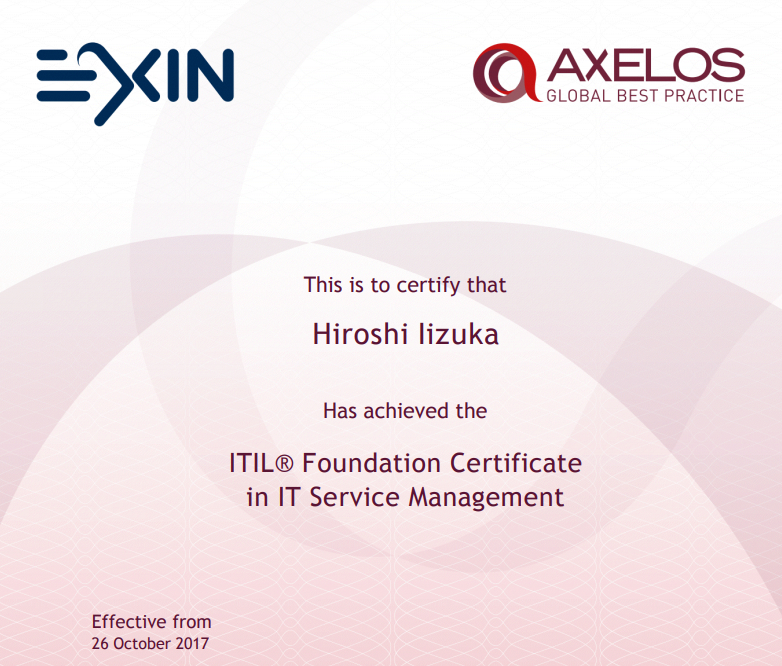
ちなみに、ITIL FoundationというITIL入門認定資格に合格したときに、このようなものを発行していただけました。
受験料は高いです。Foundationは難易度が高くないので、独学でも合格できます。
特に大きな組織の中でたくさんのシステムが乱立してしまうと、同じような機能を持ったシステムが出てきたり(=冗長)、組織内のシステム開発規約に沿っていないシステムが出てきて管理が困難になるといった問題が起こったりします。ITILを理解して、システムの中長期的なコスト削減や、ITサービスの品質向上が今後求められるようになるかもしれません。