※現在、この記事のような日本語文法・日本文化に関する英語のブログの執筆を承っております。
【At first】
Hello, this is MIKA!
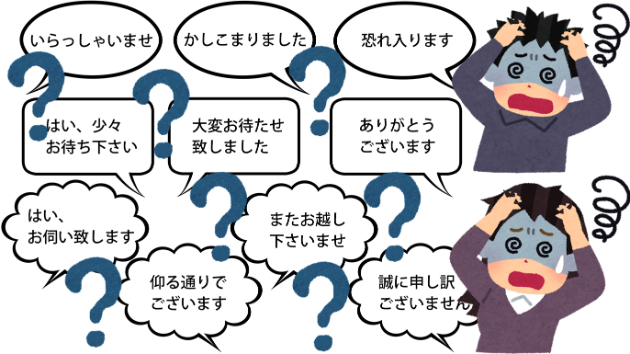
Suddenly speaking, but...do you have any ploblems for "Keigo"!?
Maybe, most of you say "Yes I have!!" strongly.
However, especially for someone who want to work in Japan, it's essential skill to learn "Keigo"!! Anyway, if you are in that case, you can't avoide it.
But, please feel easy! After reading this article, you will have understood most part of "Keigo".
Most specially, I'll explain you the difference between "Sonkeigo" and "Kenjougo" which confuses you easily.
【The kinds of "Keigo"】
-"Sonkeigo"
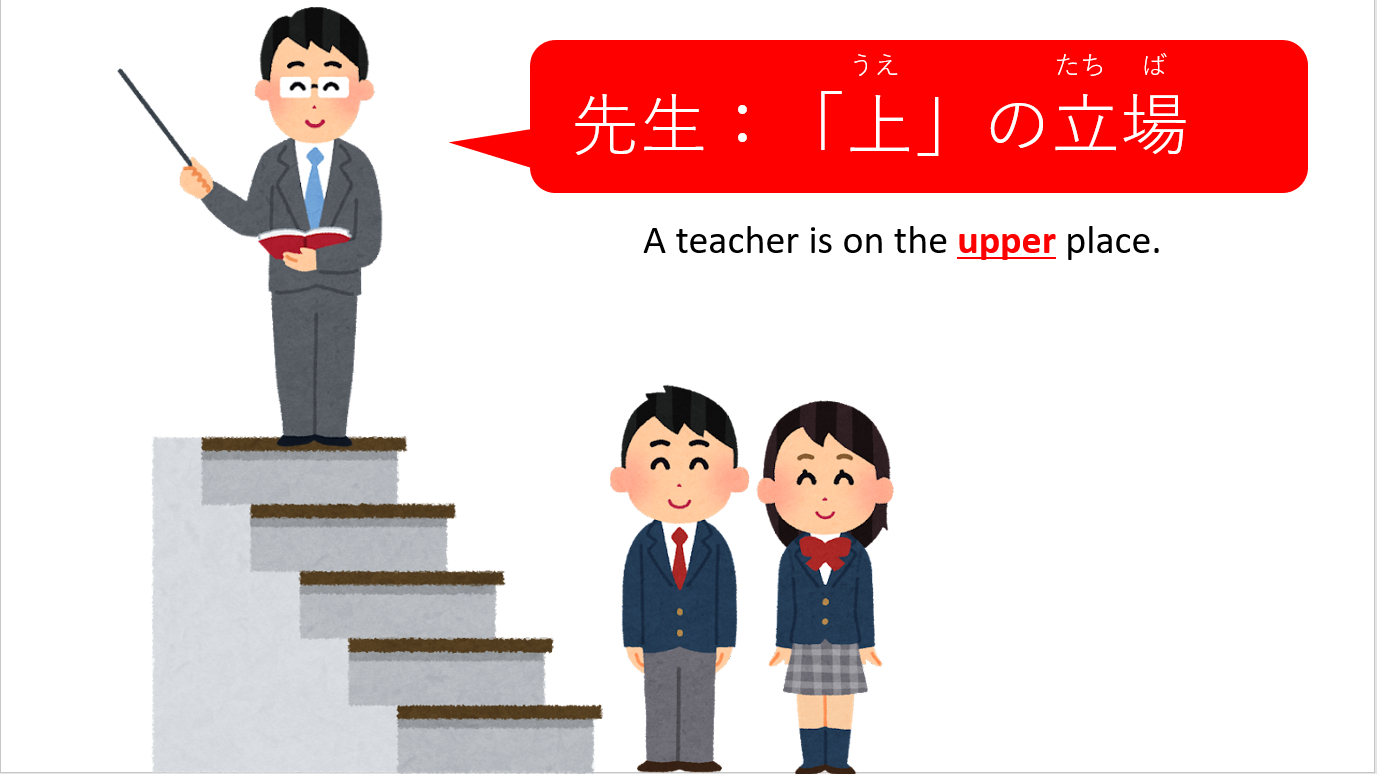
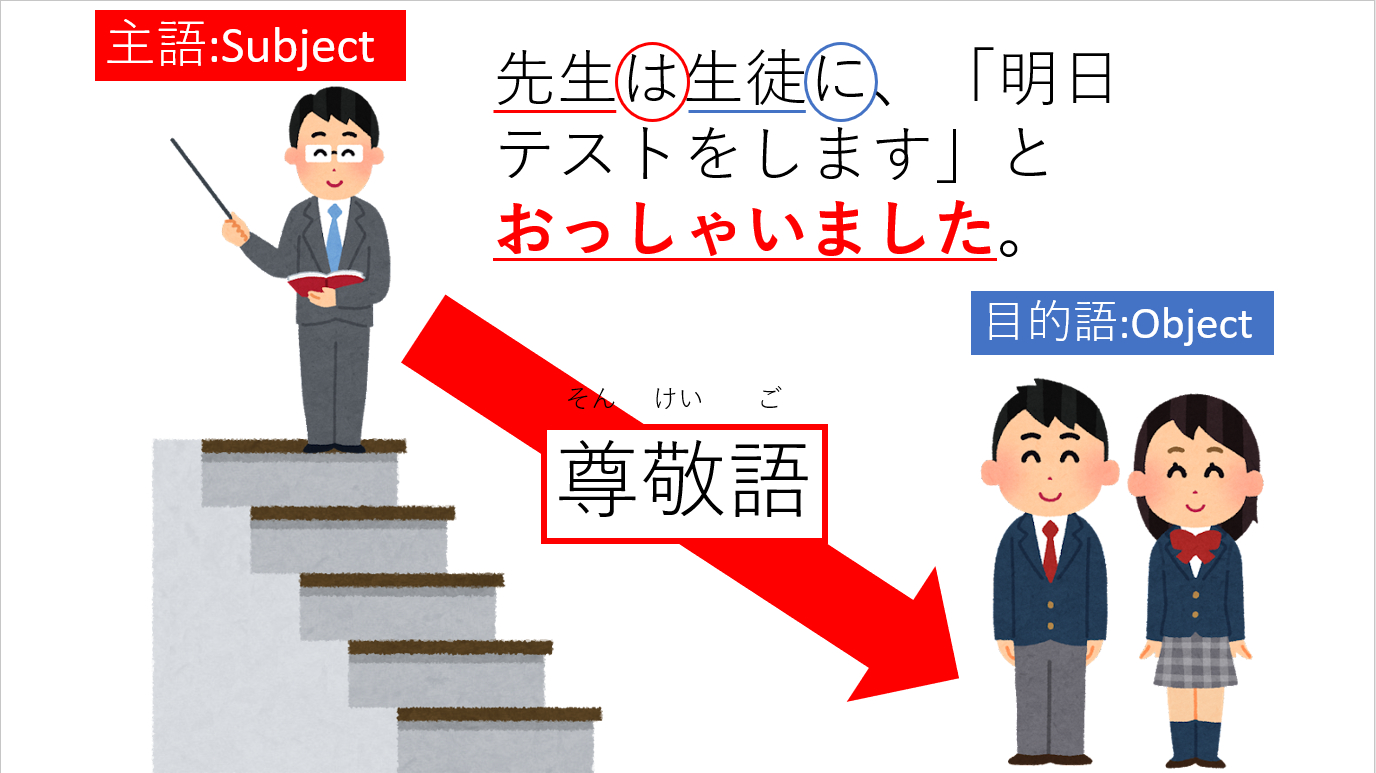
We use "Sonkeigo" when the【Subject】is in the upper place than the【Object】.
It's difficult to understand with only a sentence, let's think together with illustrations.
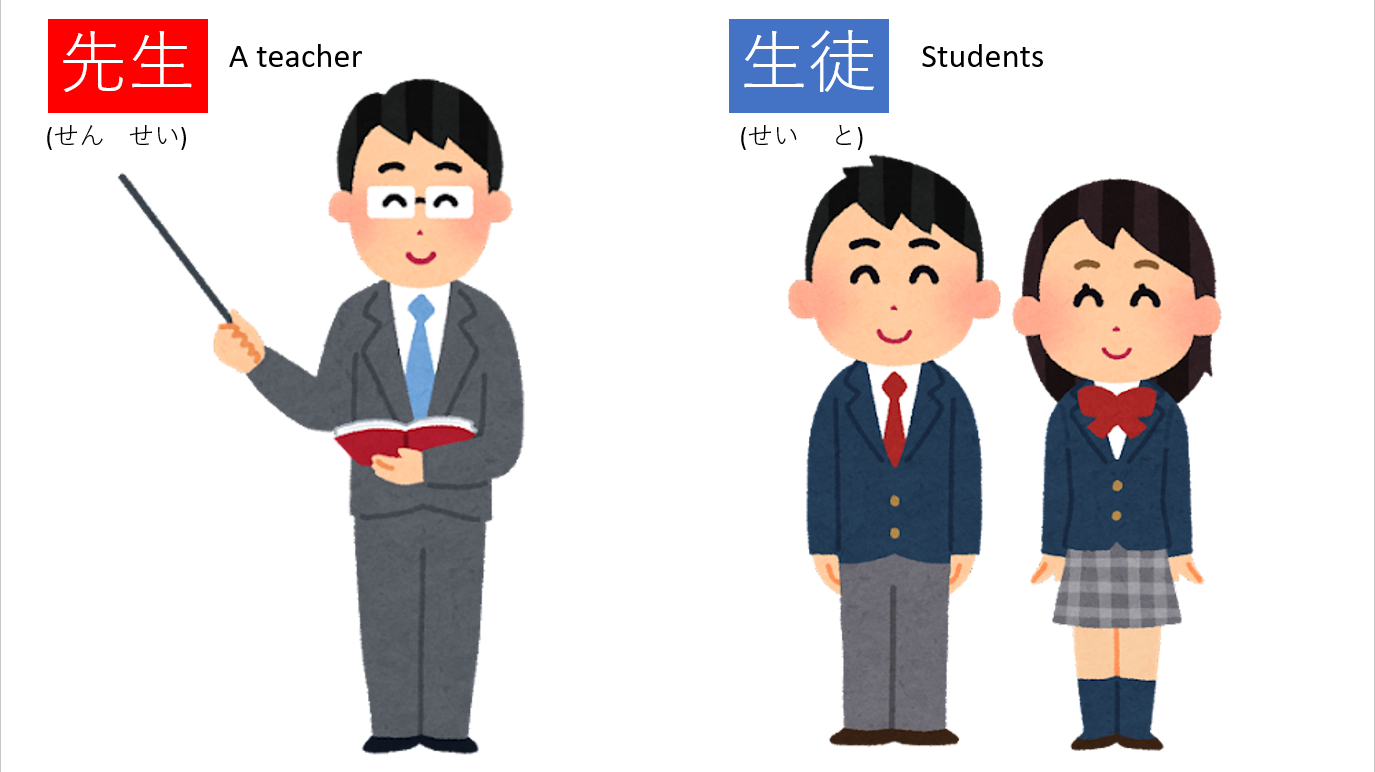
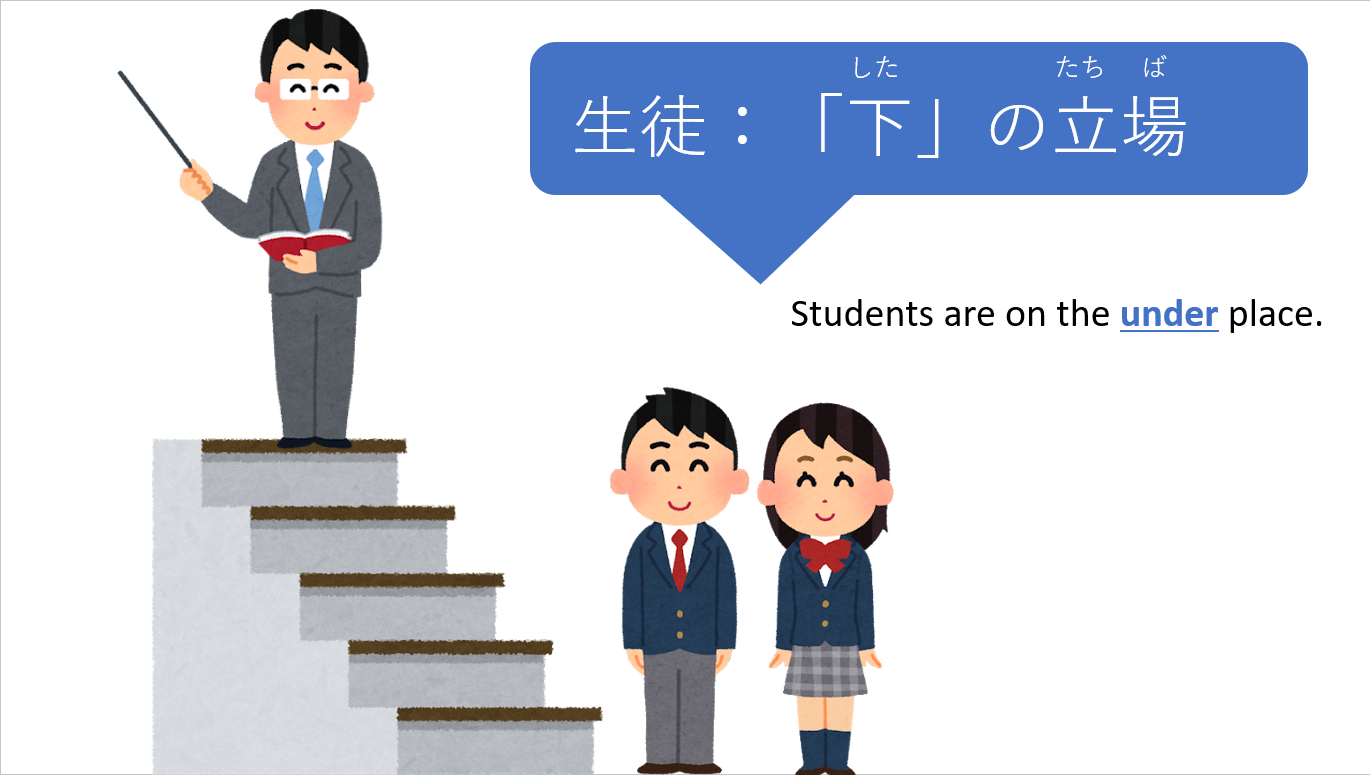
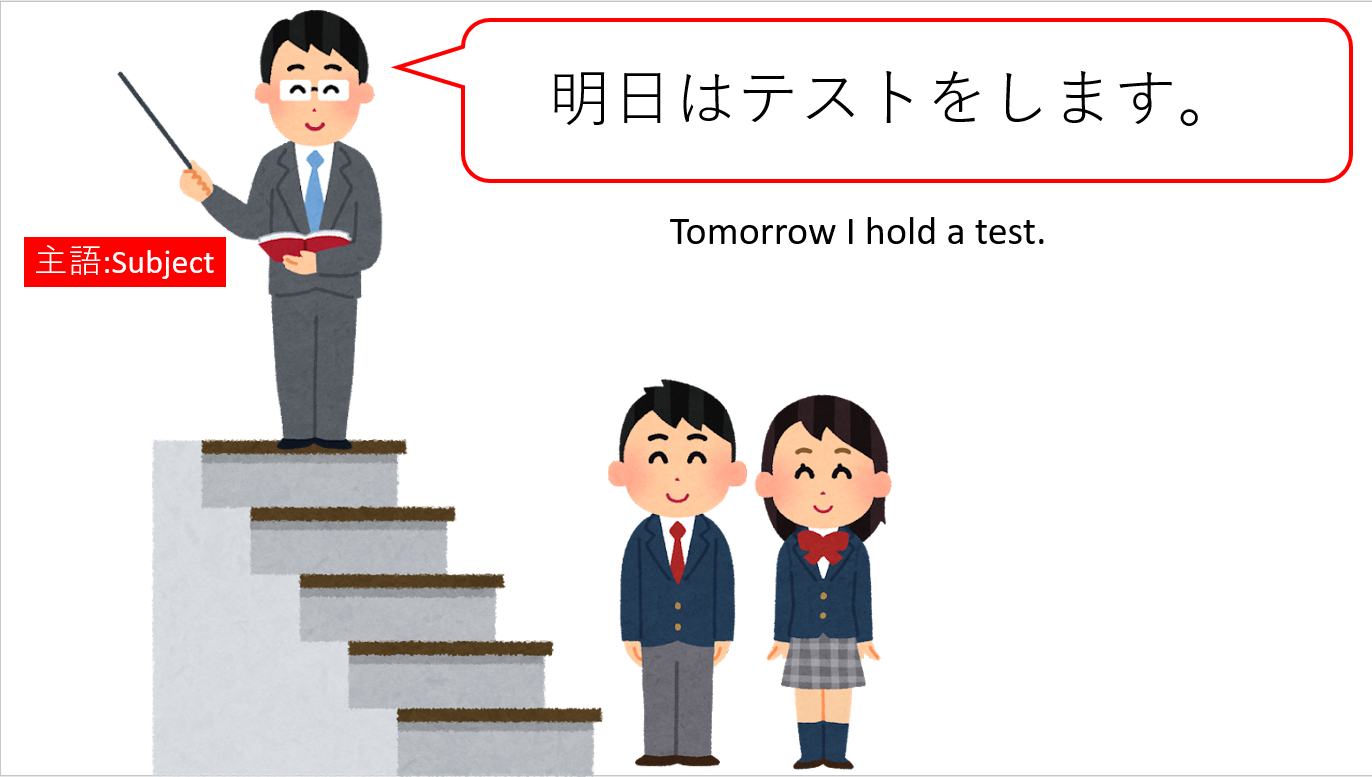
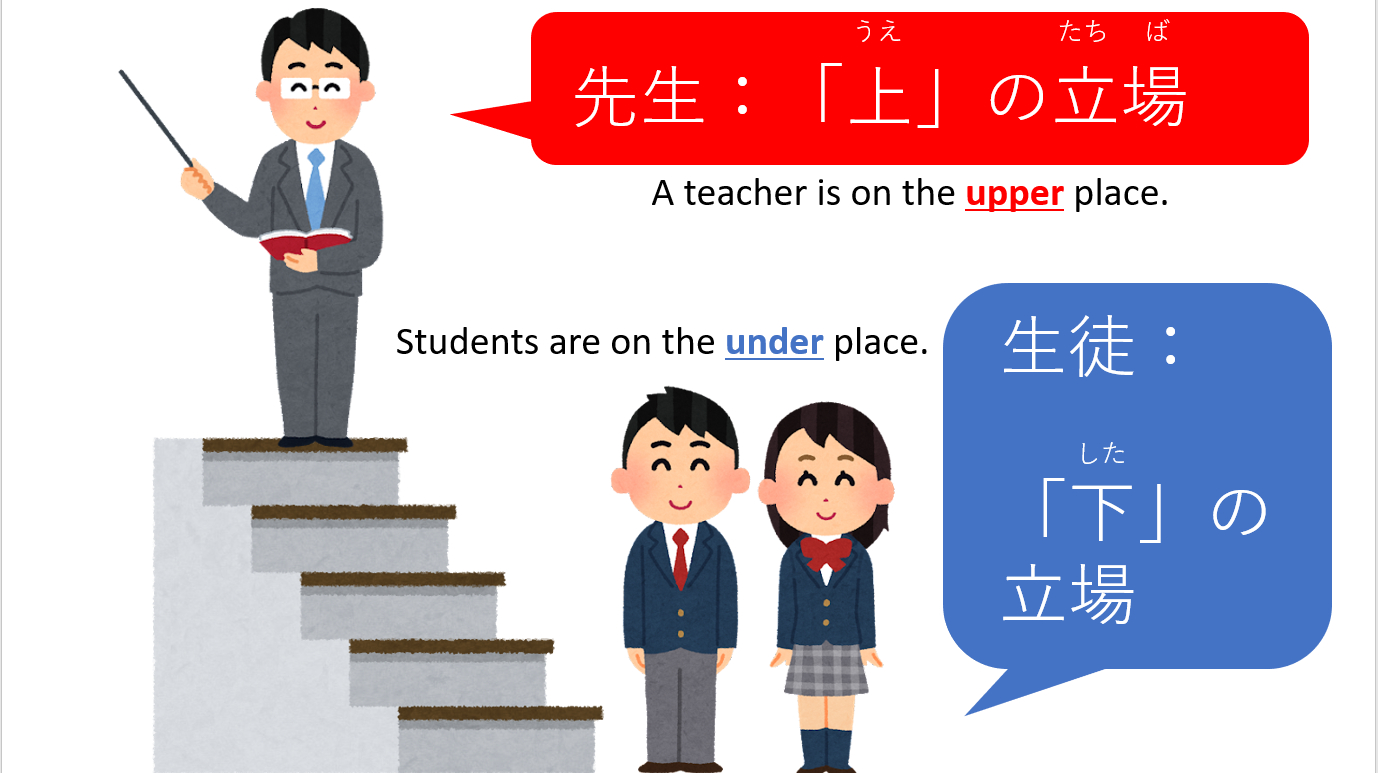
First, there are a teacher and students. In that case, which is in the upper place?
Of course, the answer is a teacher and students are in the under place.
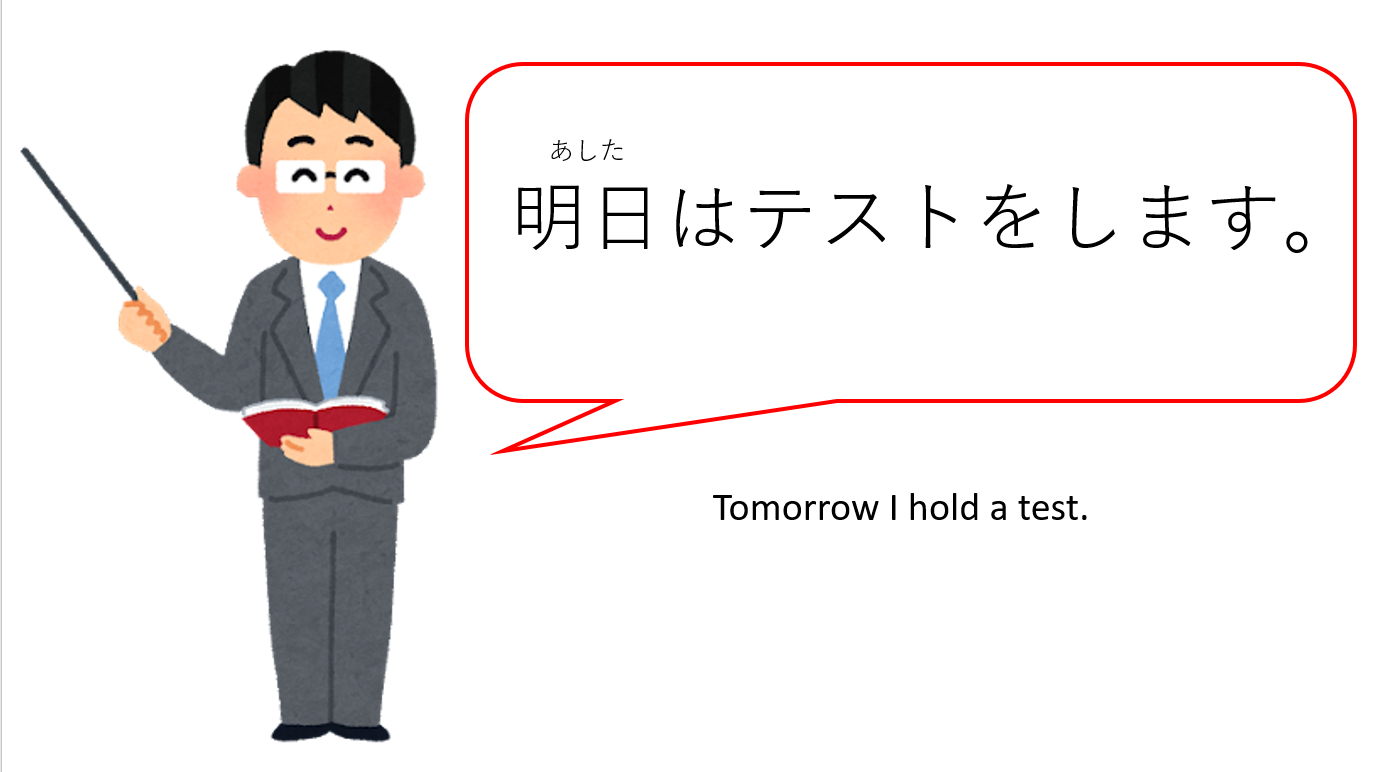
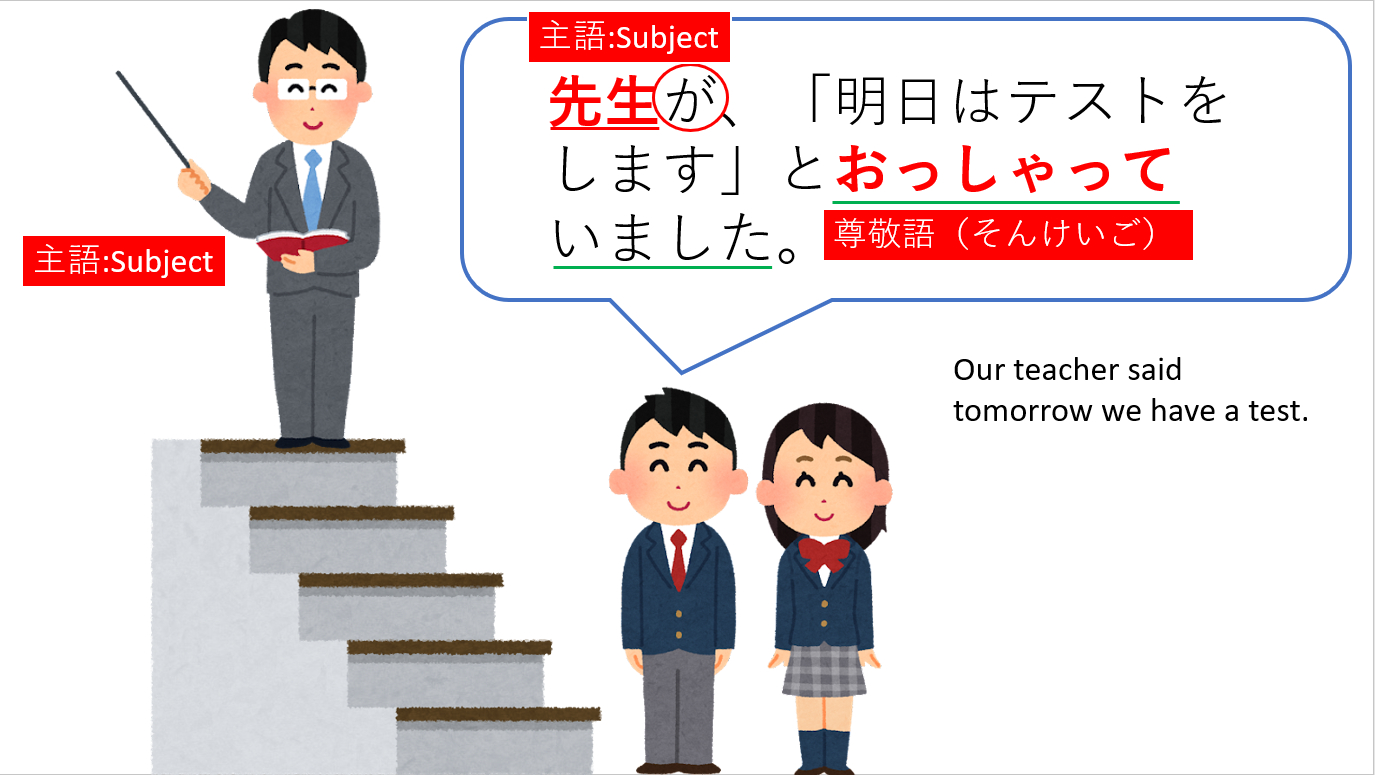
Then, a teacher said;
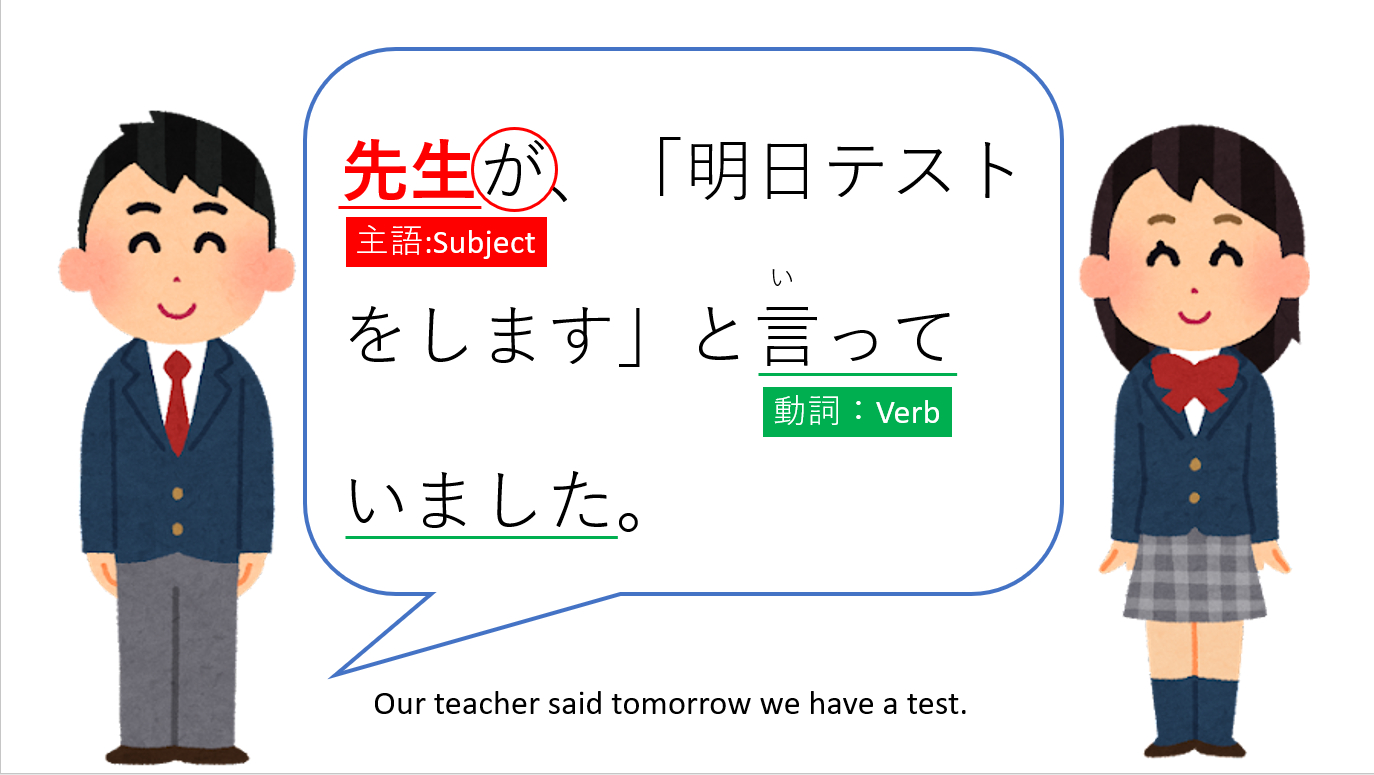
And, the boy tells the girl that information.
In this case, the【Subject】is a【teacher】who is in the upper place.「言っています」is 丁寧形(ていねいけい/Teinei-kei), in other words, it's「丁寧語(ていねいご/Teinei-go)」, so we have to correct it to "Sonkeigo".
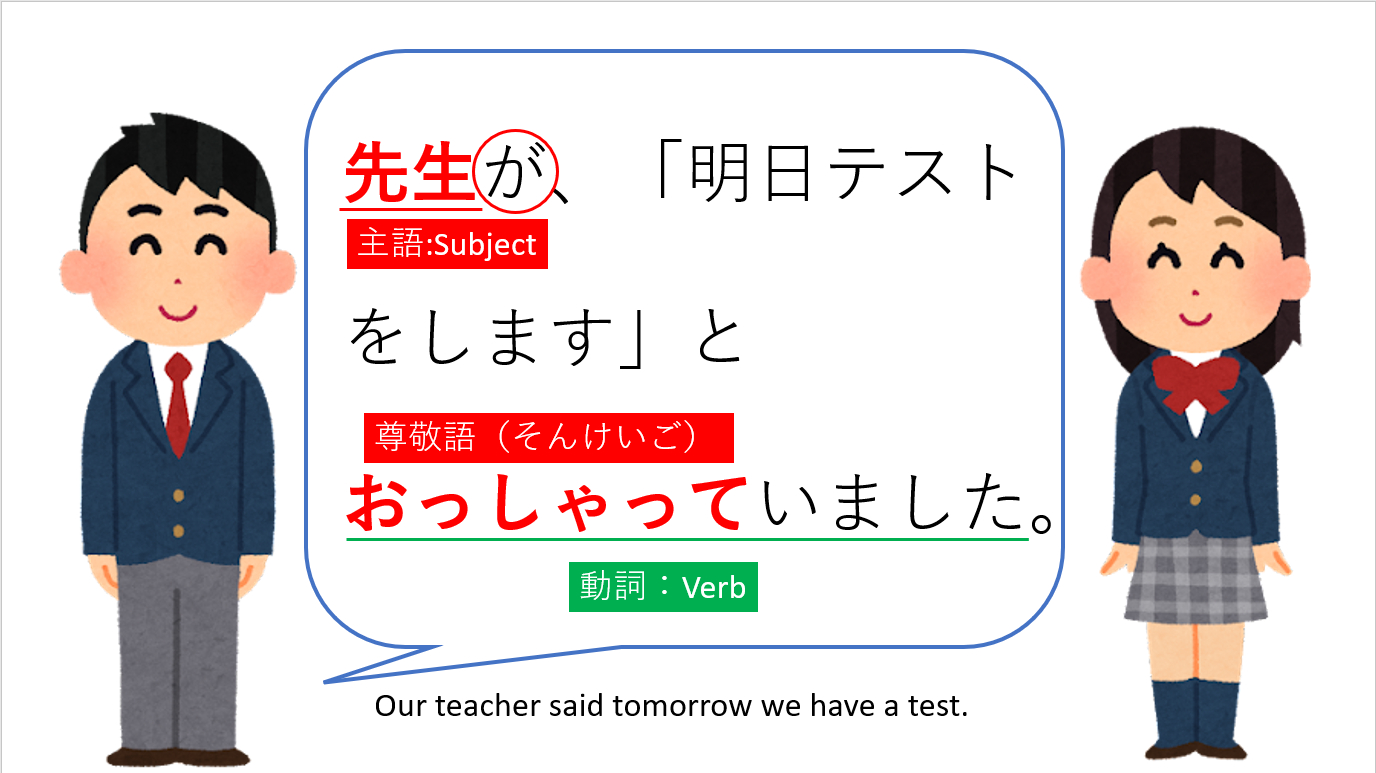
The "Sonkeigo" of 「言います」【丁寧語】 is 「おっしゃる」, so 「言って【て形/Tekei】いました」 will become 「おっしゃって【て形】いました」.
Then, let's check again.The【Subject】is a teacher, in the upper place.
That's why it's better to use「先生が~おっしゃっていました【尊敬語/Sonkeigo】」than「先生が~と言っていました【丁寧語】」.
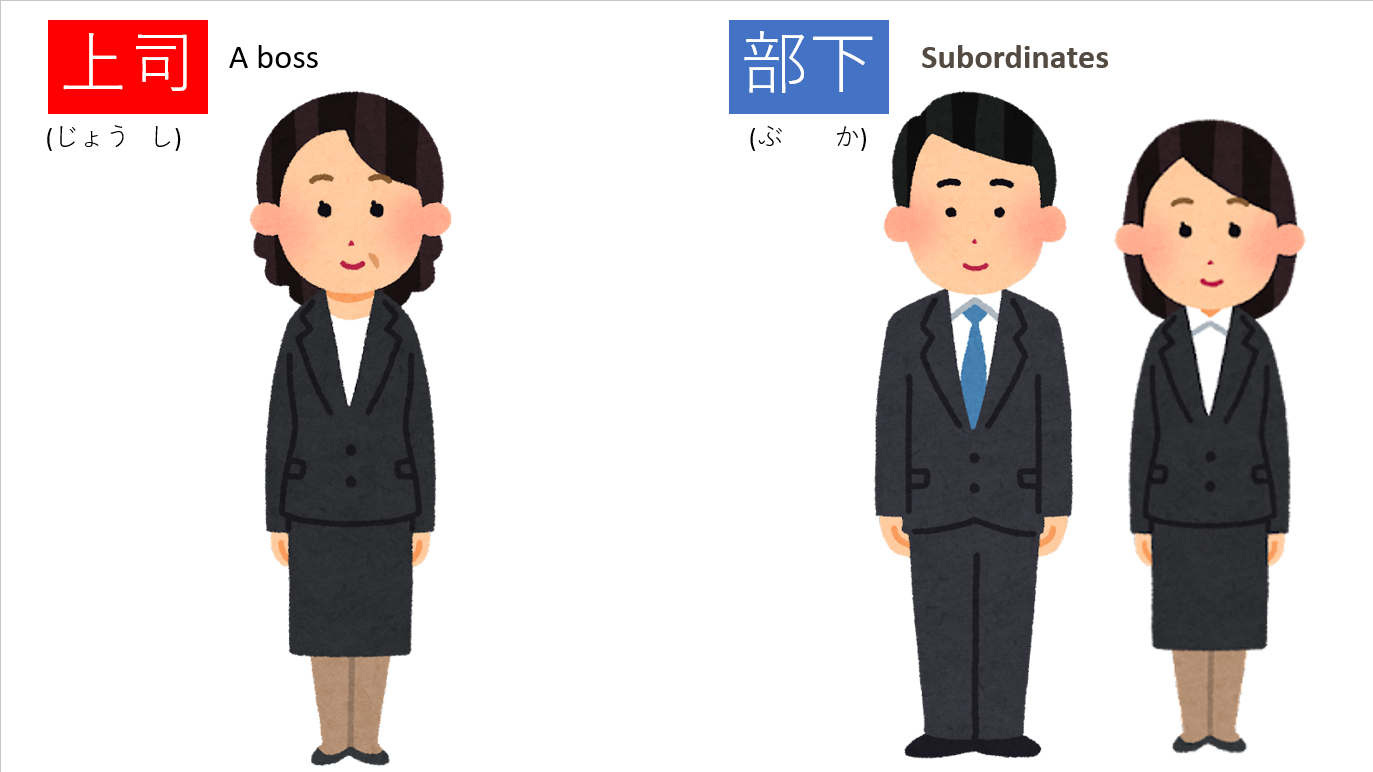
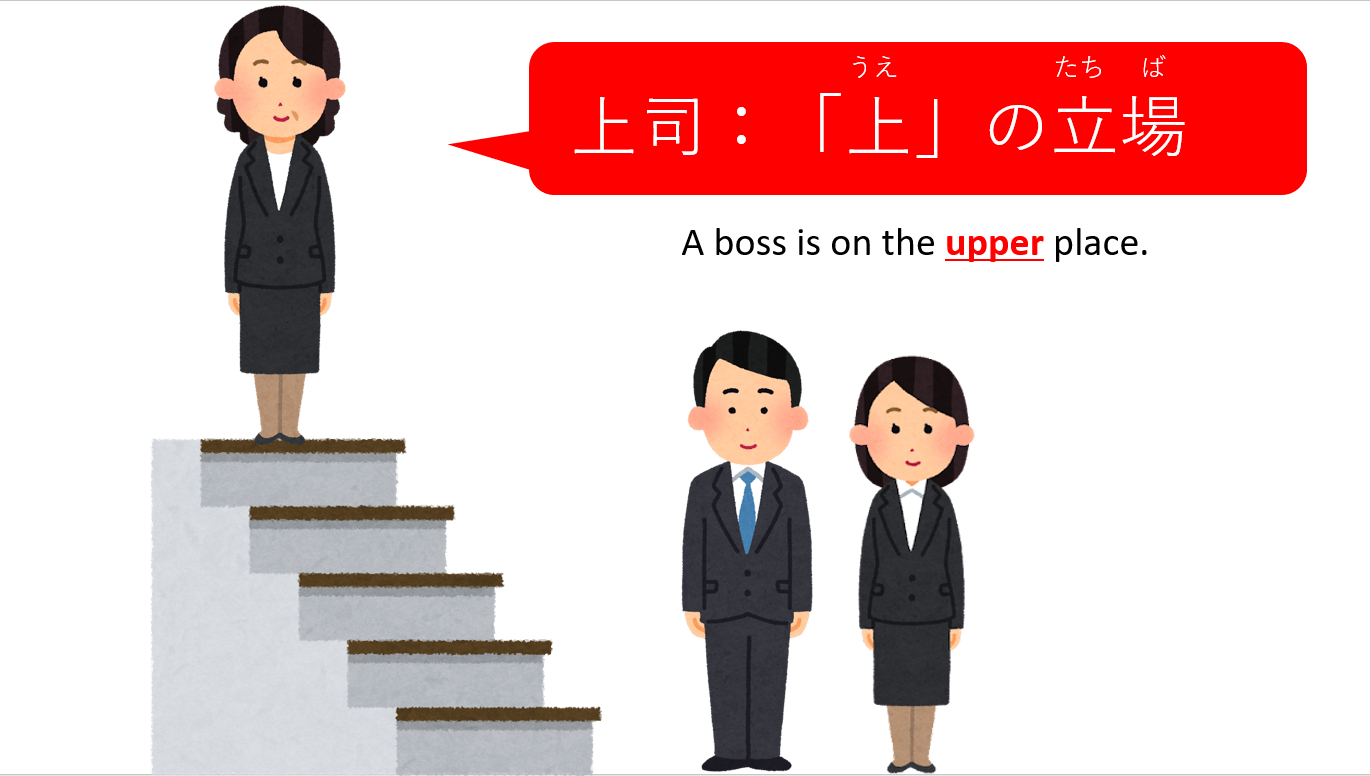
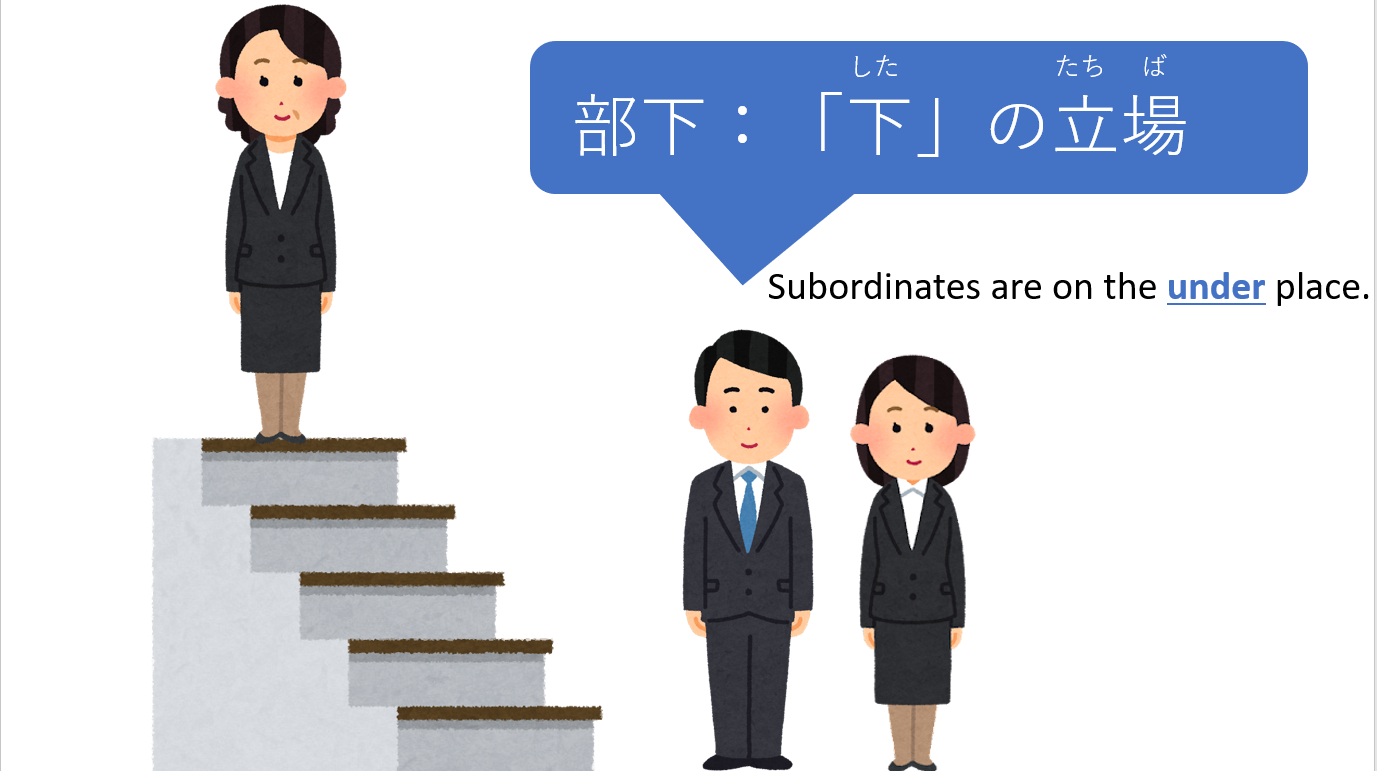
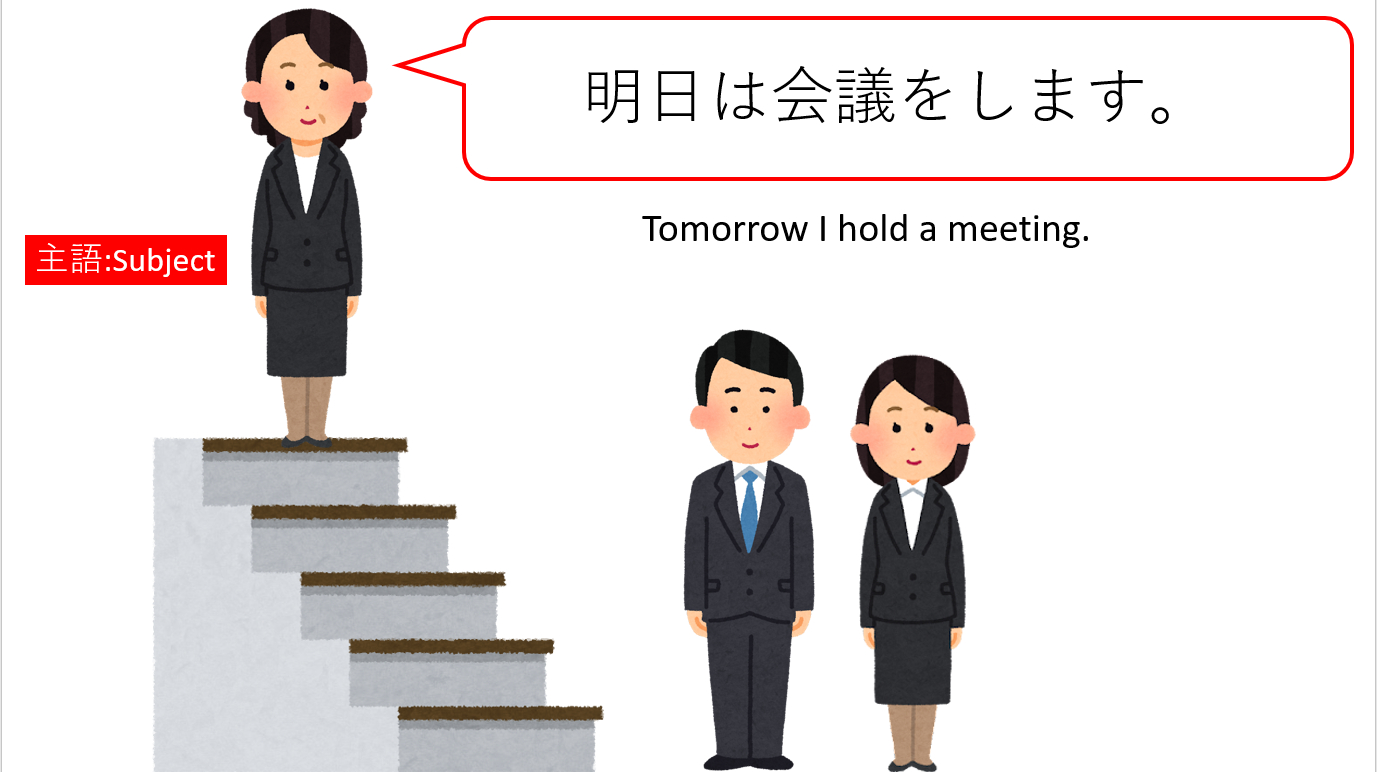
Next, it's the case of a boss and subordinates. Which place is upper and under?
Of course a boss is in the upper place and subordinates are in the under place.
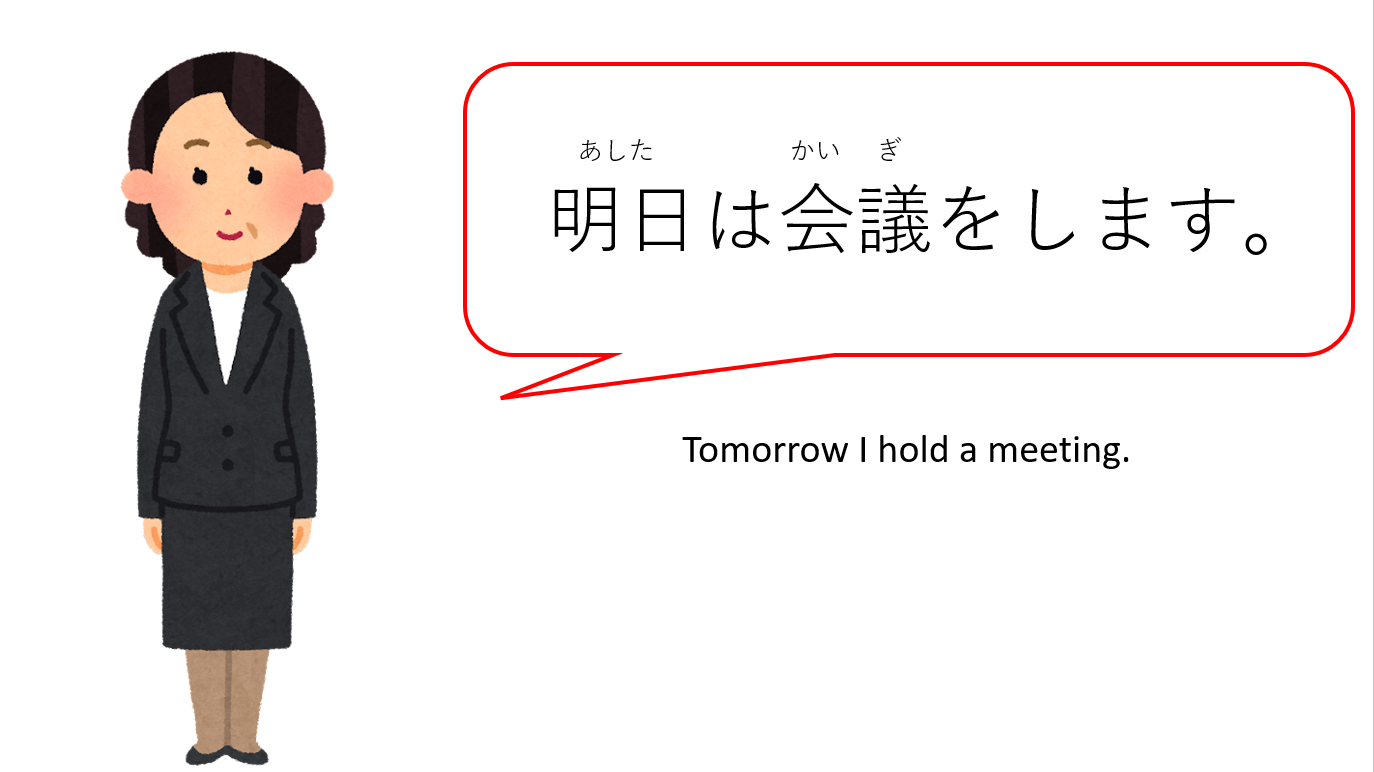
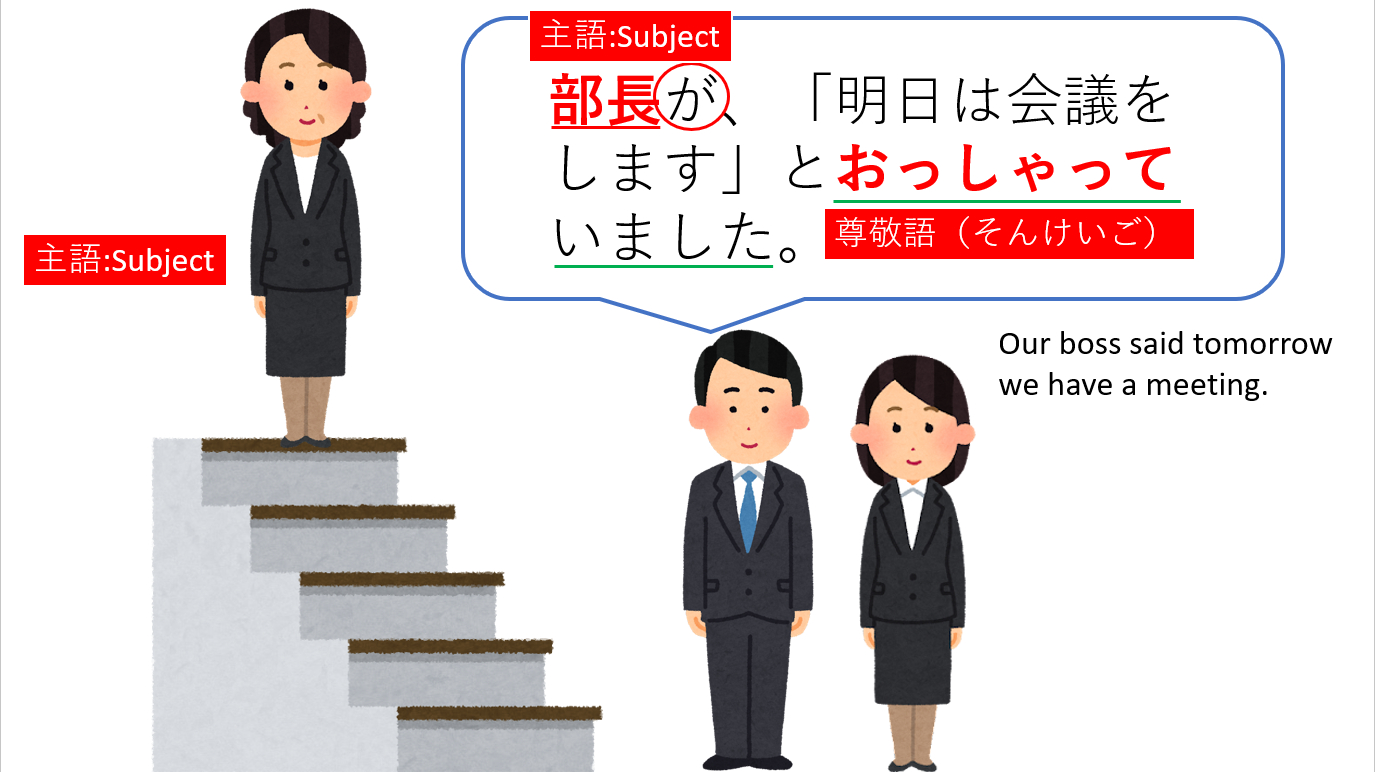
And, the boss said that;
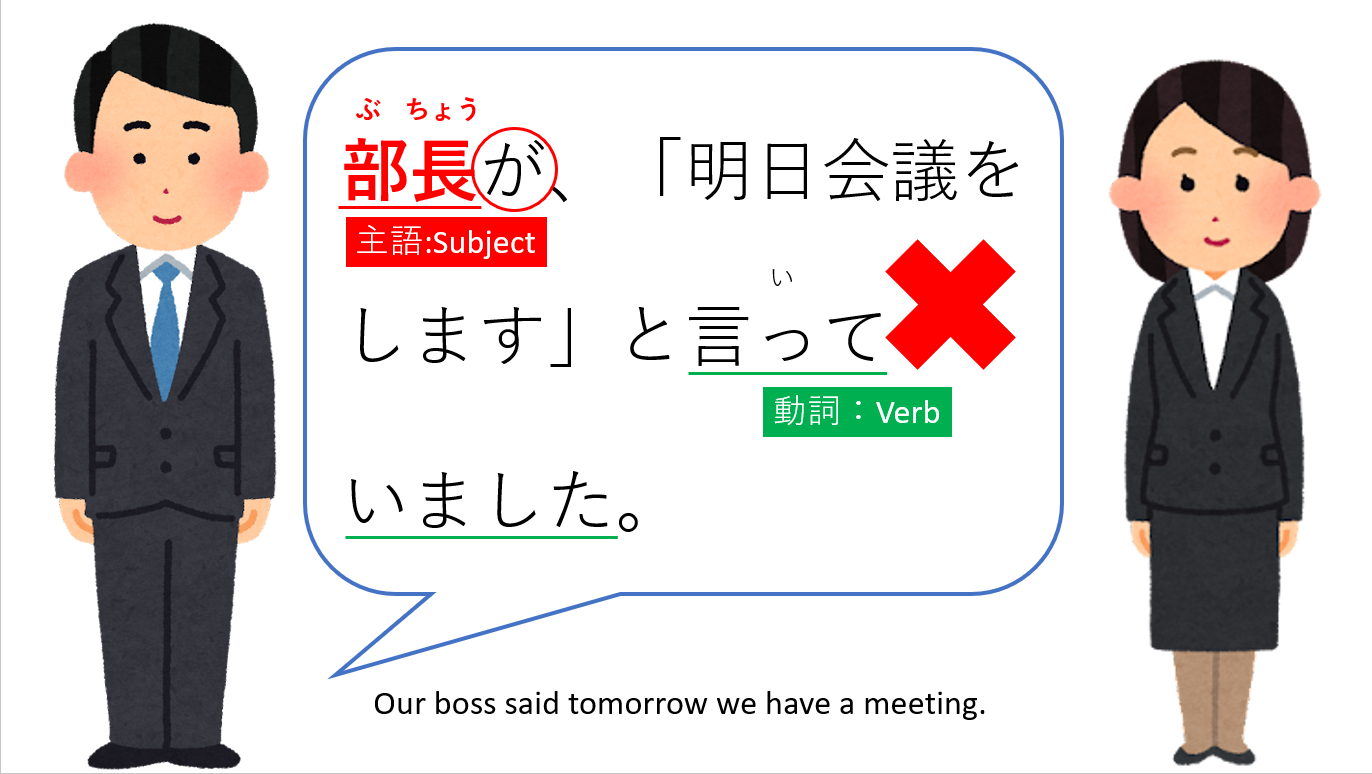
Then, the man tells this information to the woman.
If you are the man, don't say it in【丁寧語/Teineigo】!!
Because they are already adults and tolk in their office.
If you are a working person, you should use a "Keigo", so
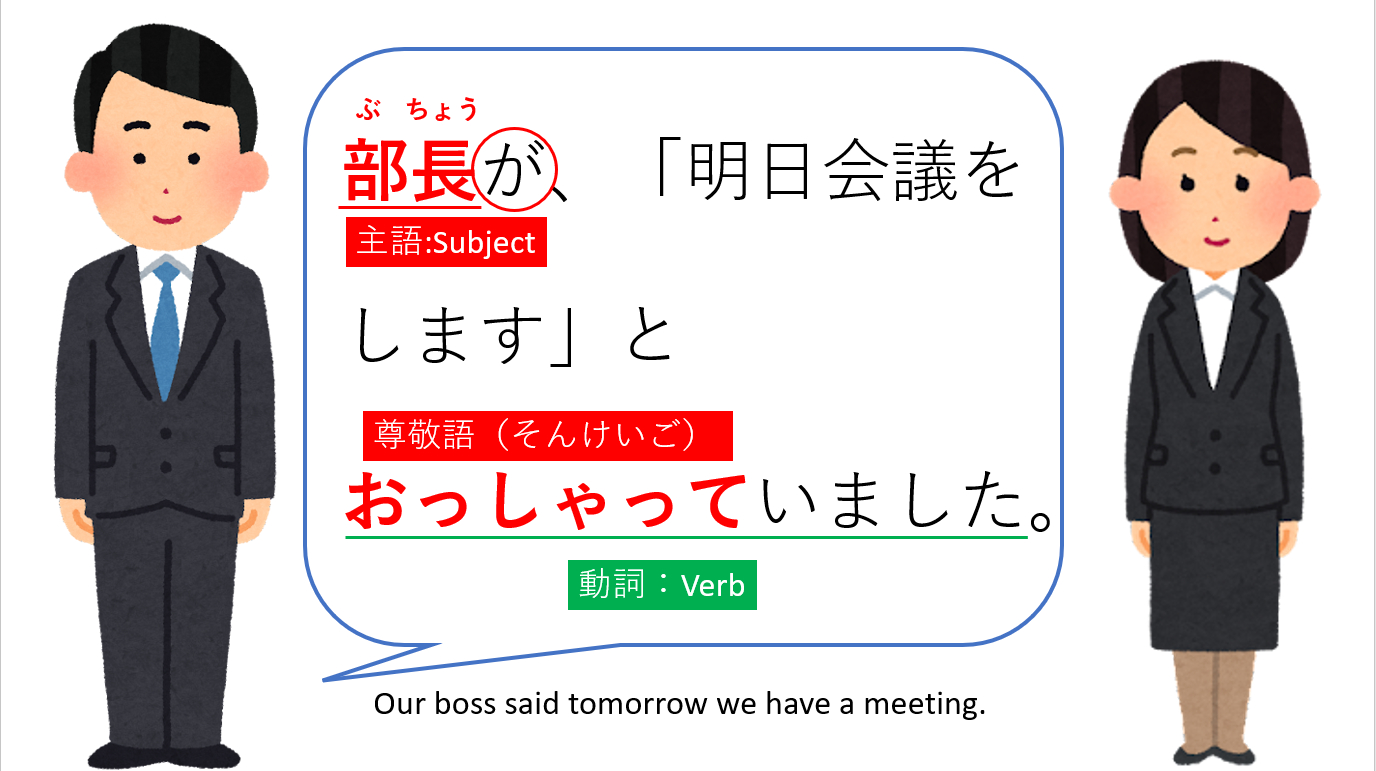
it's better to say 「部長が~とおっしゃっていました【尊敬語/Sonkeigo】」!
Then, let's check again.
The person who said "Tomorrow I hold a meeting" was their boss, the person in the upper place, so
The correct answer is「部長が~とおっしゃっていました」!
【"Kenjougo"】
Secondly, I'll tell you about "Kenjougo".
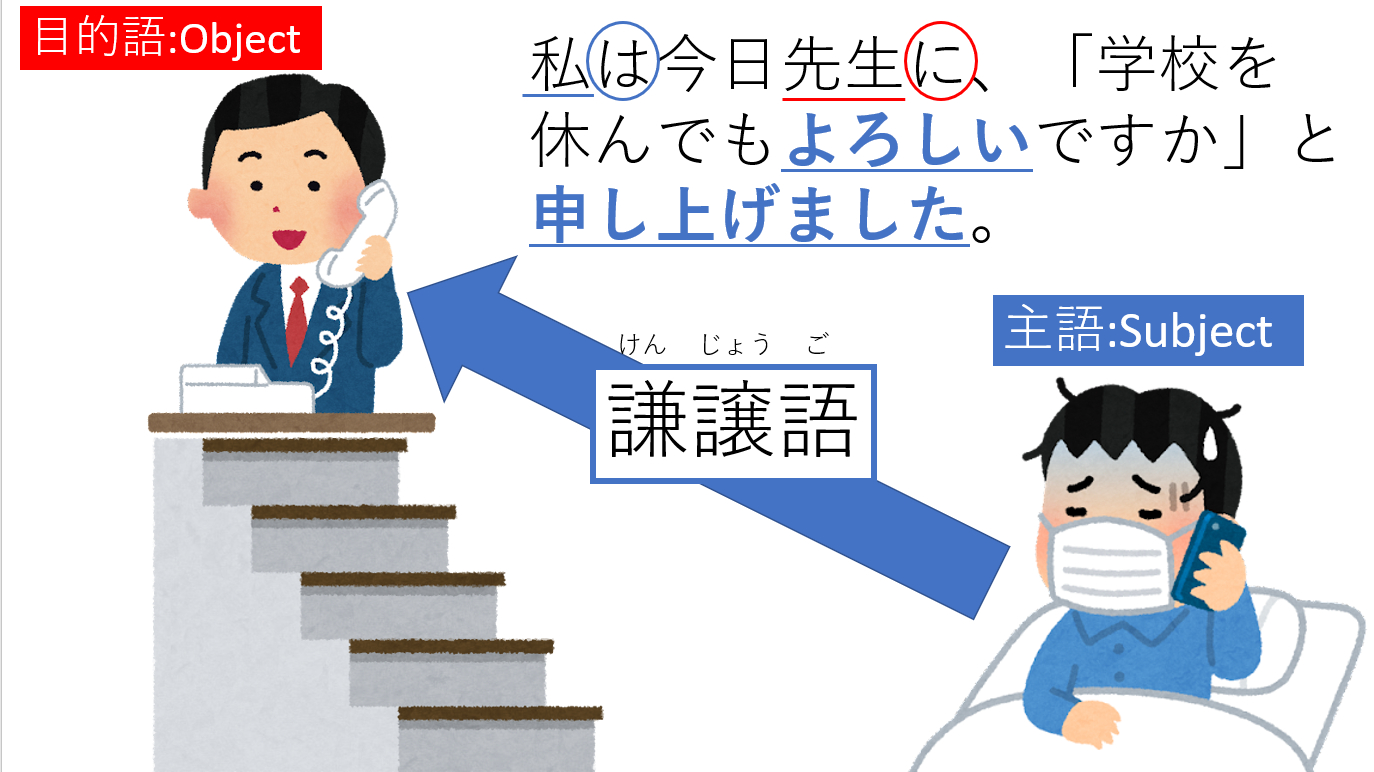
We use "Kenjougo" when the【Subject】is in the under place than the【Object】.
Same as "Sonkeigo", let's learn with some illustrations.
In the case of "Kenjougo", it's also important to think which is in upper and under place.
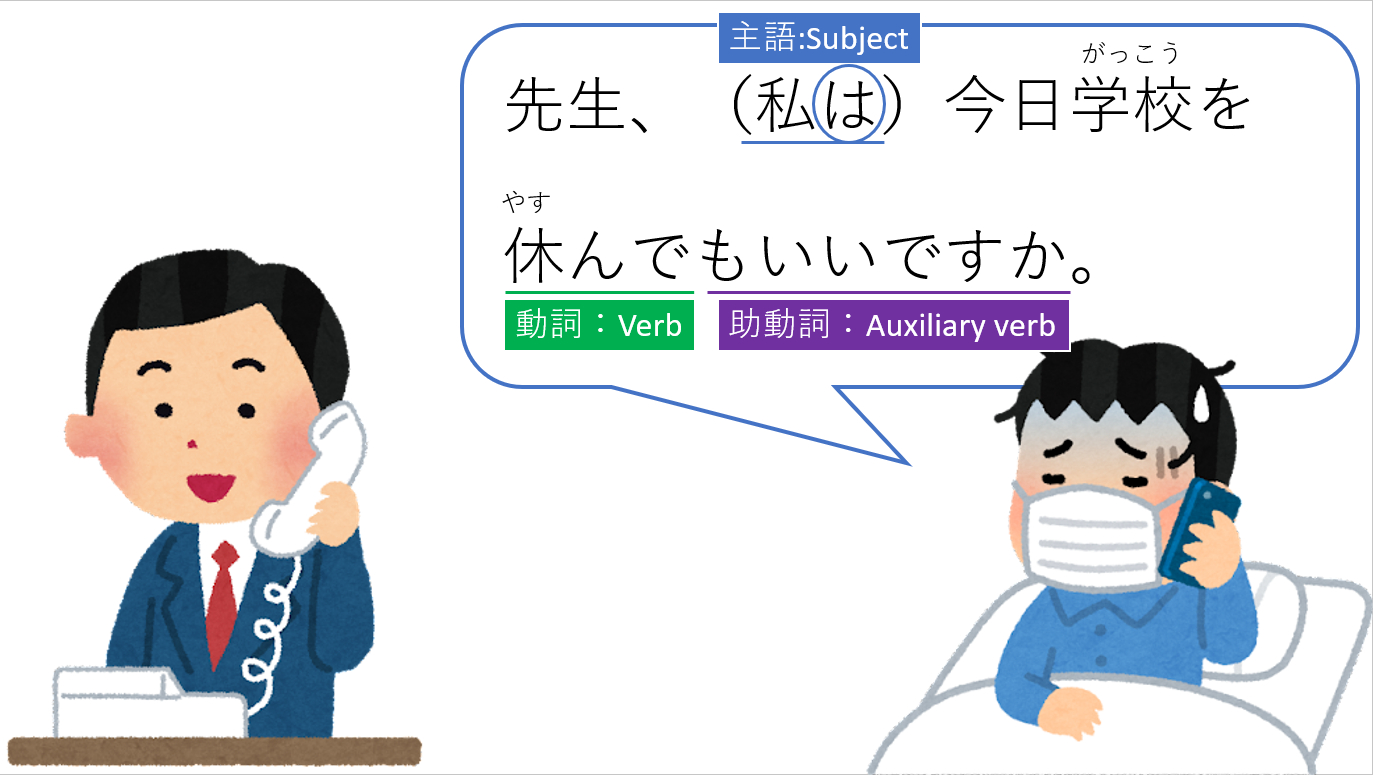
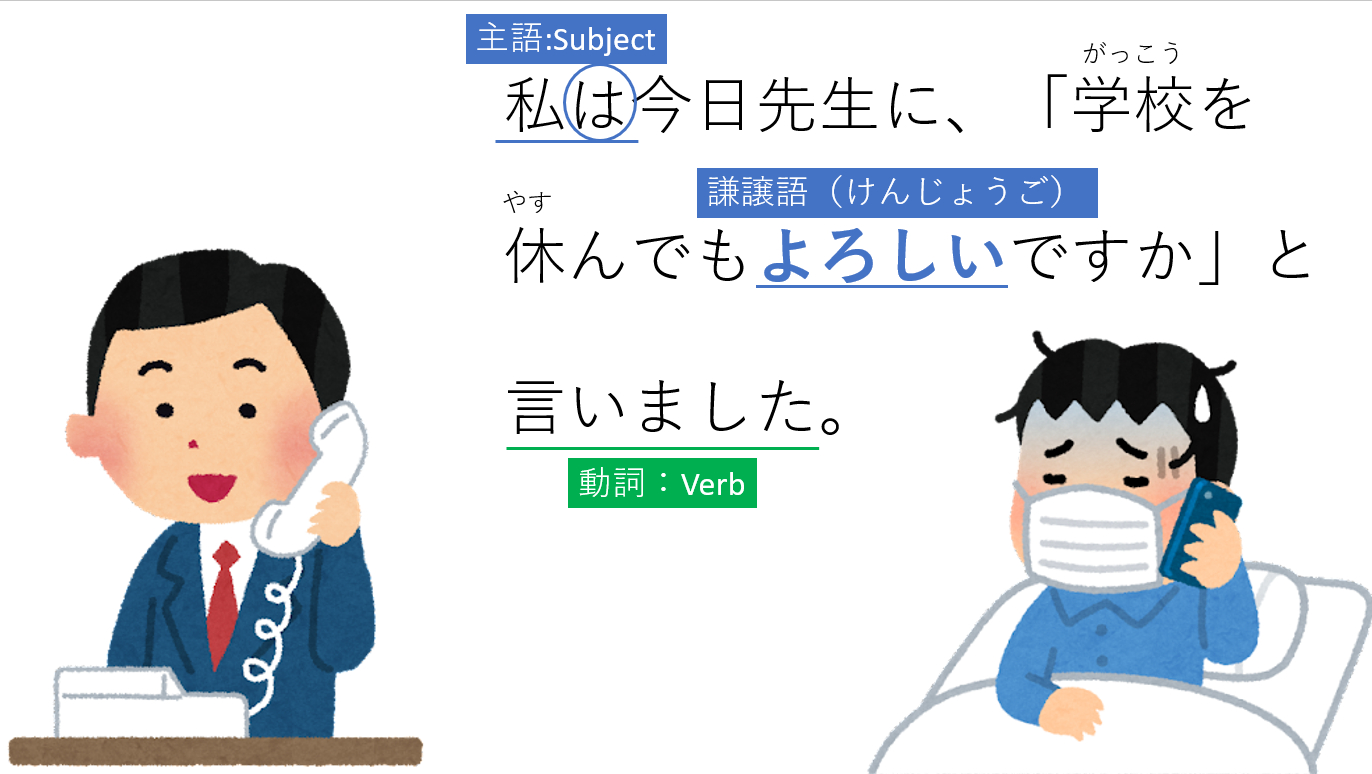
By the way, for example, you are a student in Japanese language school, and when you catch a cold, what should you do and what do you say?
The answer is to call to the shcool and tell you want to take a rest like that.
However, the other person on the phone is a teacher, the person who is in the upper place.
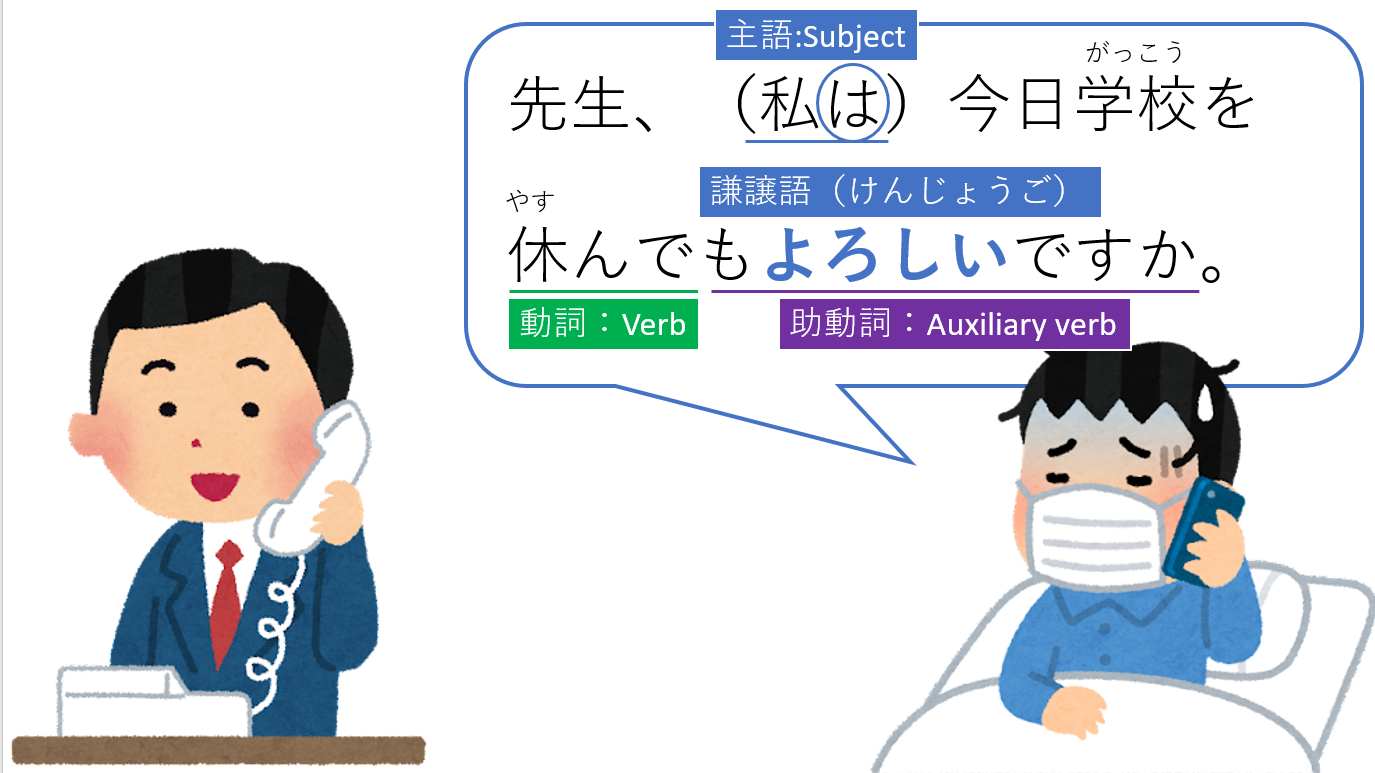
So, how should you say to make it better?
The answer is to say 「よろしい【謙譲語/Kenjougo】ですか」or「よろしい【謙譲語】でしょうか」!!
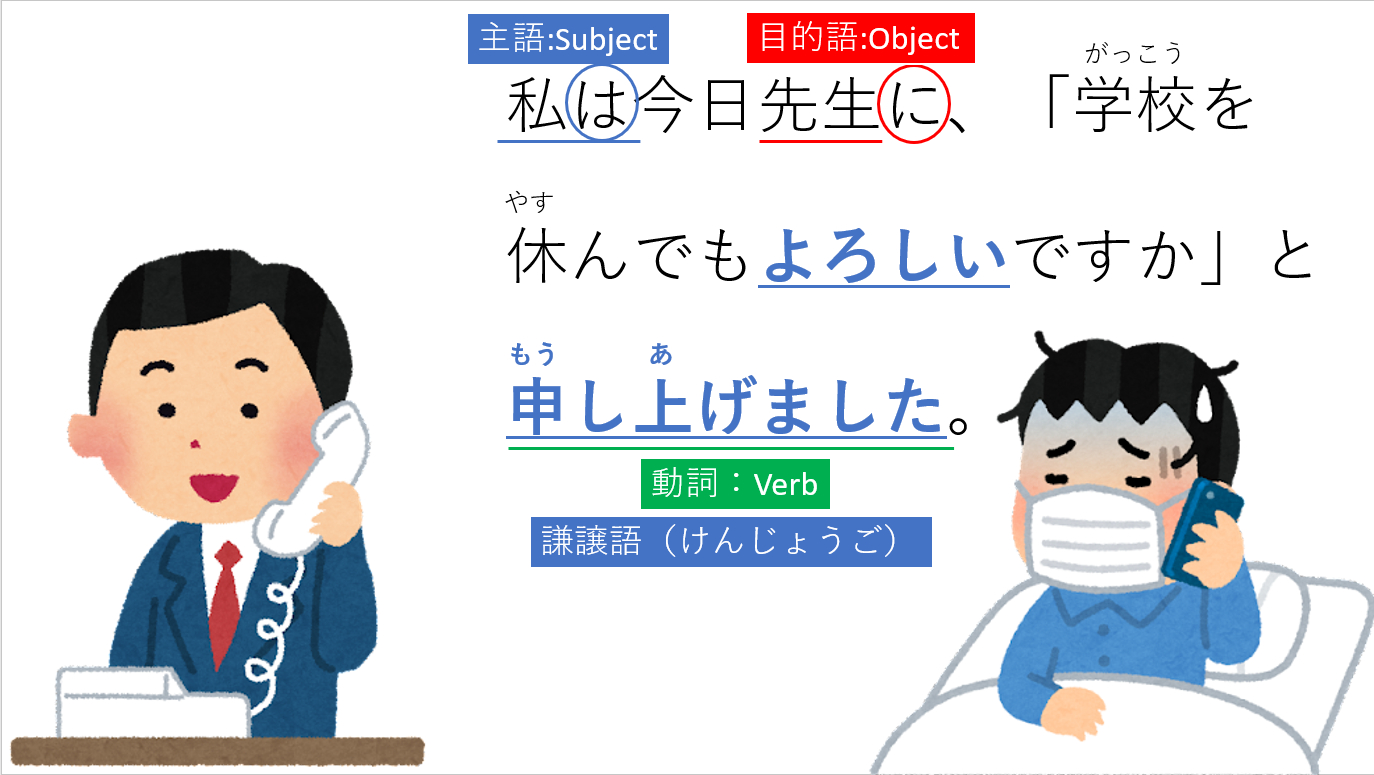
Next, let's think about a sentence, not a dialogue.
「言いました」is【丁寧語/Teineigo】,so we have to change it to 【謙譲語/Kenjougo】.
The "Sonkeigo" of 「言いました」【丁寧語】is「おっしゃいました」,but the "Kenjougo" of that is 「申し上げました」.
After all, we use "Kenjougo" when the under place person do something to the person in the upper place, and
we use "Sonkeigo" when the upper place person do something to the person in the under place.
【"Teineigo"】
Then, "Teineigo", which has already appeared, is the expression to pay respect to someone who listen to a speach or read sentences.
In the case of a【Verb】, "Masu-form" or "Masu-and-ta-form", in other words if there is 「~ます」「~ました」 at the end of each sentences, they are "Teineigo".
And in the case of【いadjective】,【なadjective】or a【Noun】, 「~です」「~でした」 after them like「楽しかったです」「きれいでした」「いい話でした」and so on, they are "Teineigo".
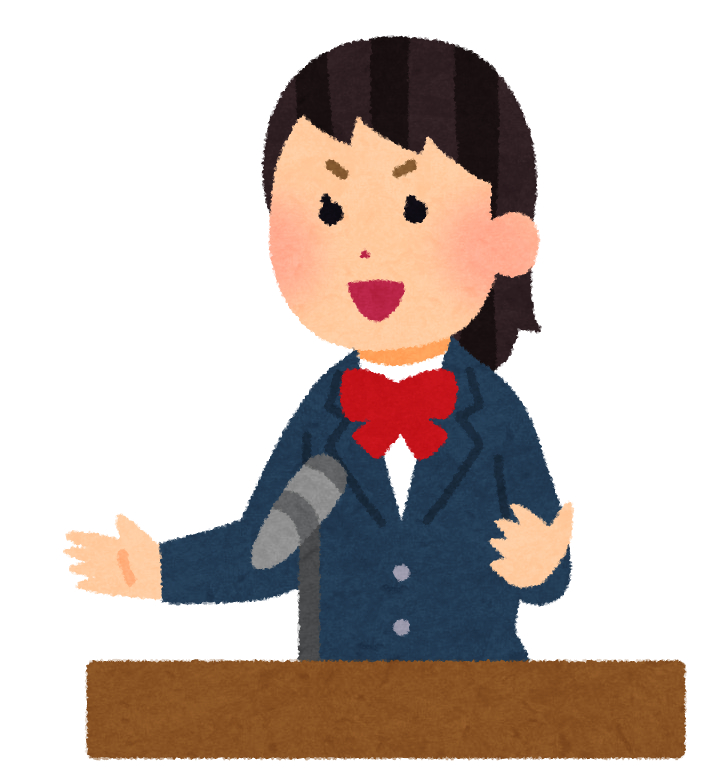
The time we use it is, for instance, we do a speach,
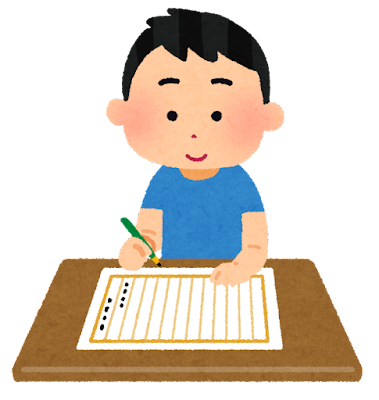
or write compositions, essaies, and letters.
【"Bikago"】
Finally, I'll tell you about "Bikago".
"Bikago" is an expression to make words more beautiful.
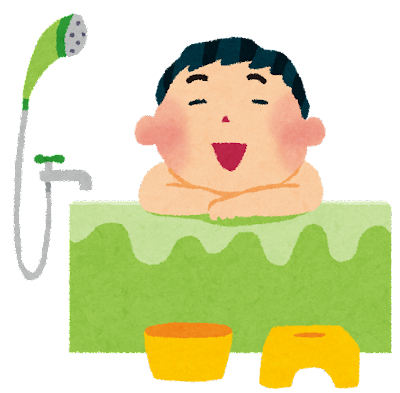
For example, such like「お金(O-kane)」,「お風呂(O-furo)」,「お箸(O-hashi)」, mainly we put「お(O)」before the words which is called「和語/Wago」, Japanese original words reading with the way "Kun-yomi".
On the other hands, such like「ご案内(Go-Annai)」,「ご紹介(Go-Syoukai)」,「ご満足(Go-manzoku)」, mainly we put「ご(Go)」before the words which is called「漢語/Kango」, Chinese original words reading with the way "On-yomi".
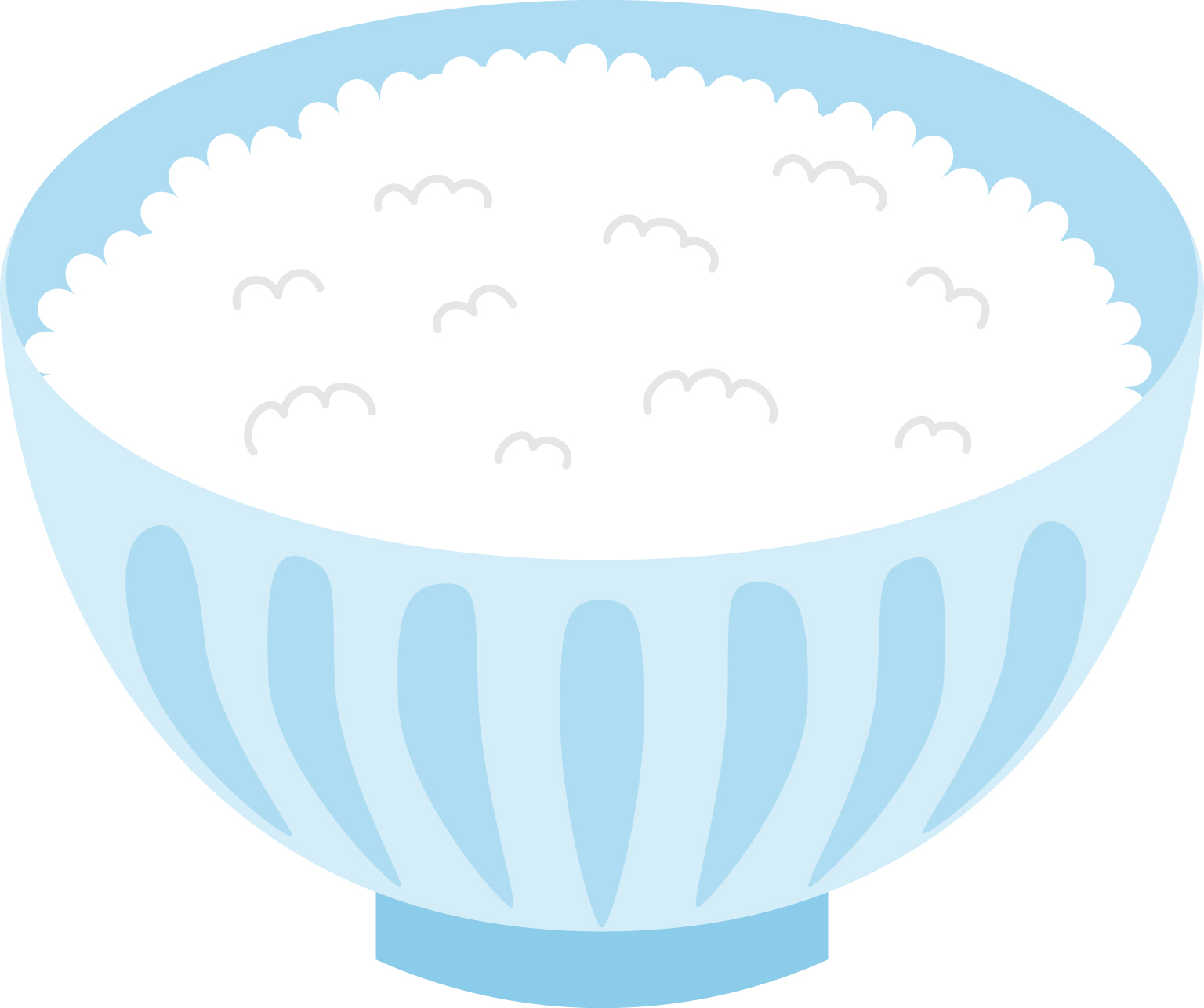
However, there is some exceptions like「ご飯(Go-han/a rice,a meal)」, please pay attention!
【Final comment】
How was it?
I can image easily there are so many persons who think "I hate Keigo! I don't want to study that forever!!". But I think "Keigo" is "Omotenashi" by words.
In other words, it's a consideration for someone who listen to a speach or read an articles.
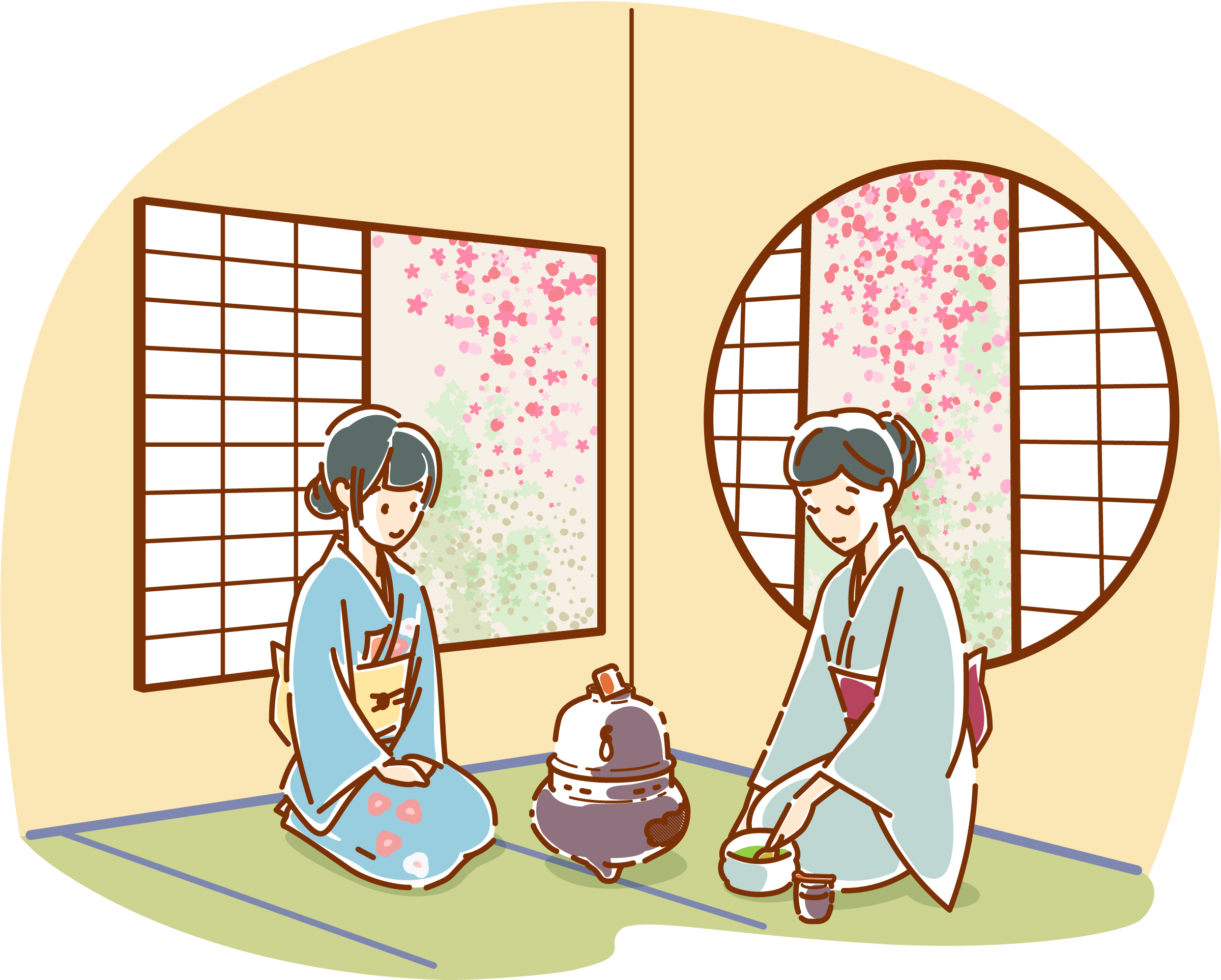
Never make the guests uncomfortable, useing a careful expression with a heart...It likes a person who try to make the guests comfortable in a tea-ceremony room, doesn't it?
In addition, if you learn Keigo correctly, you are rated high and be trusted by Japanese people than the persons who don't learn Keigo.
It's very helpful for you, so I want you to study it!