※現在、この記事のような日本語文法・日本文化に関する英語のブログの執筆を承っております。
【Why is it a mistake, 「先生の≪父≫の仕事は何ですか」?】
Hello, this is MIKA!
Suddenly asking, can you introduce your family in Japanese?
And, can you ask about other person's family?
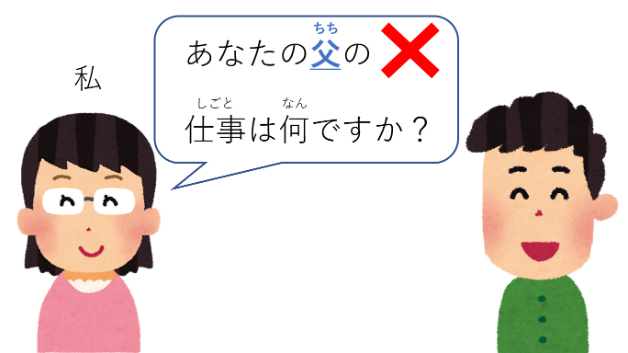
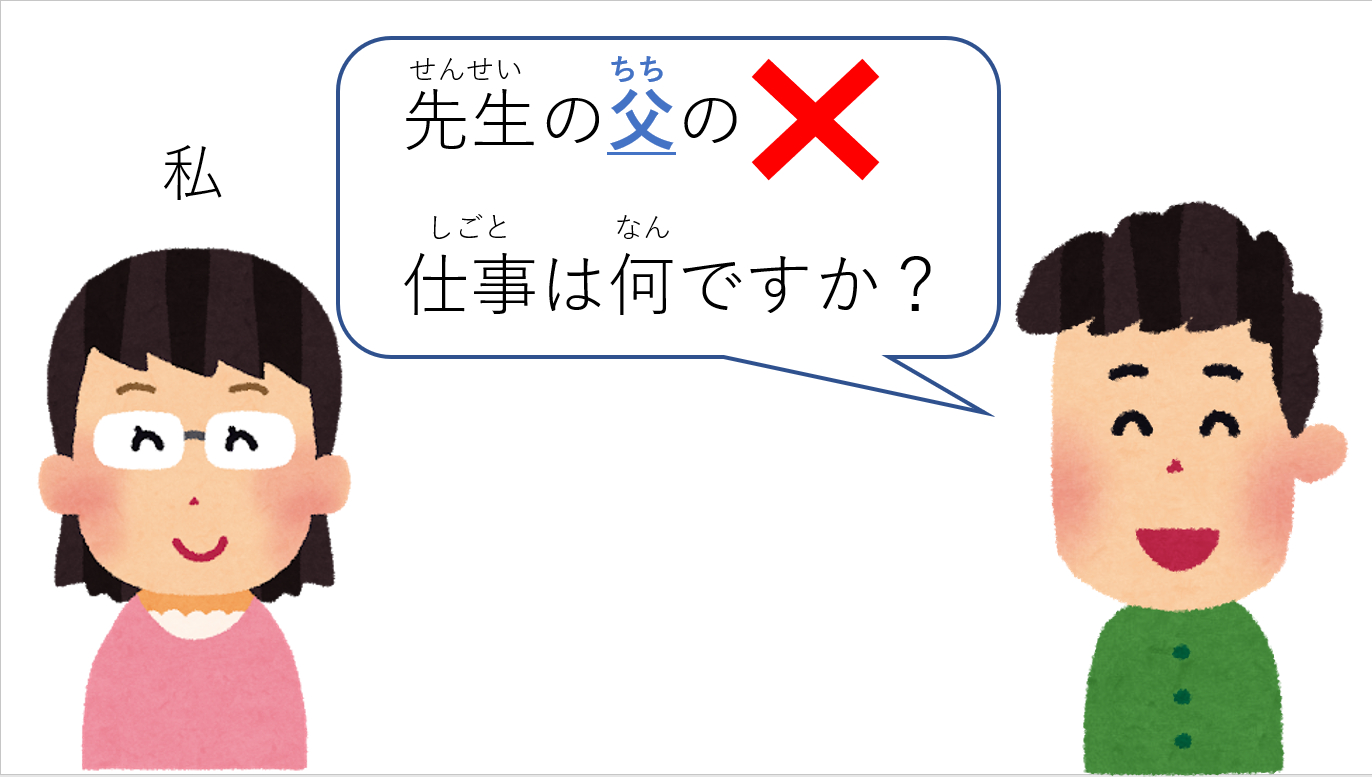
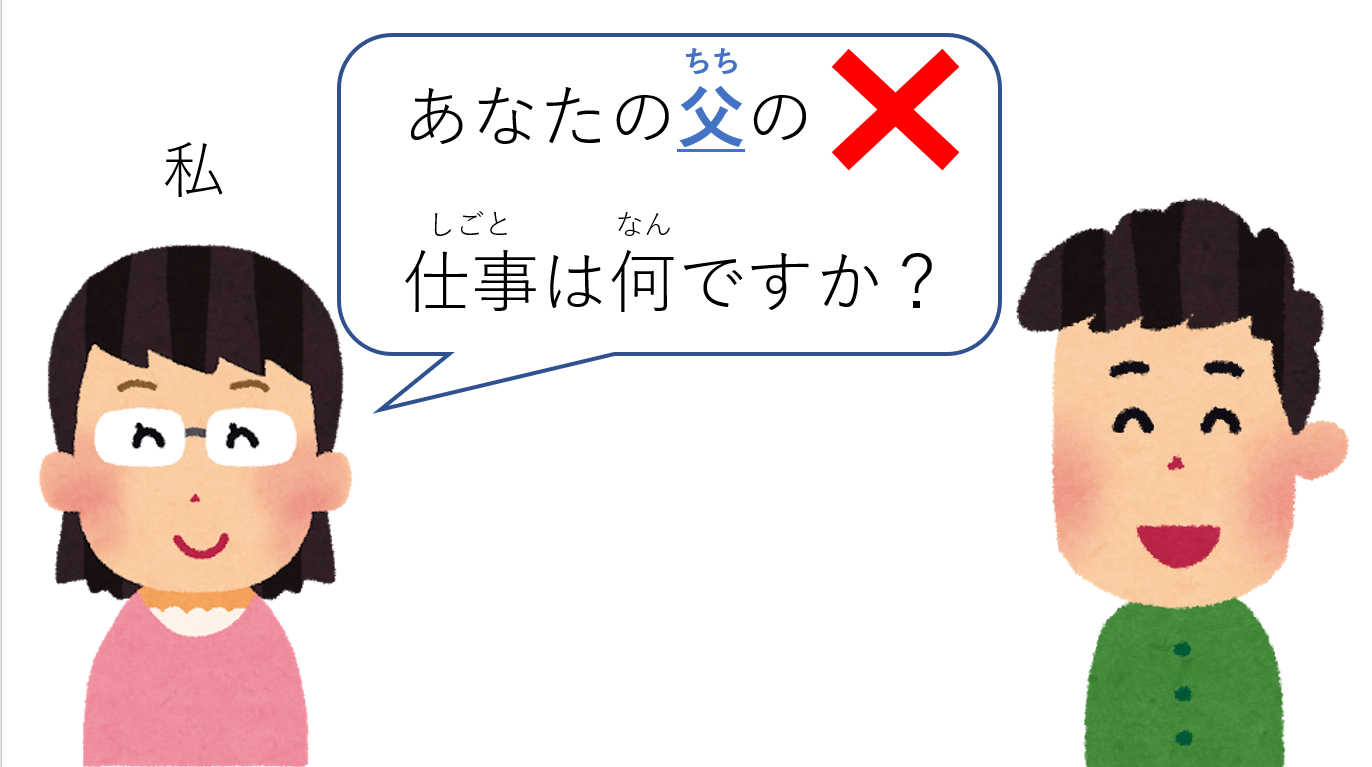
Finally, can you answer why is it a mistake; 「先生の父の仕事は何ですか」?
This time, I'll tell you about the difference of "Chichi" and "Otou-san"(Father), "Haha" and "Okaa-san"(Mother)!
In addition, the contents of this article is very important concept to study Japanese, so please put it to good use!!
【"Uchi" and "Soto"】
-In the case of a family
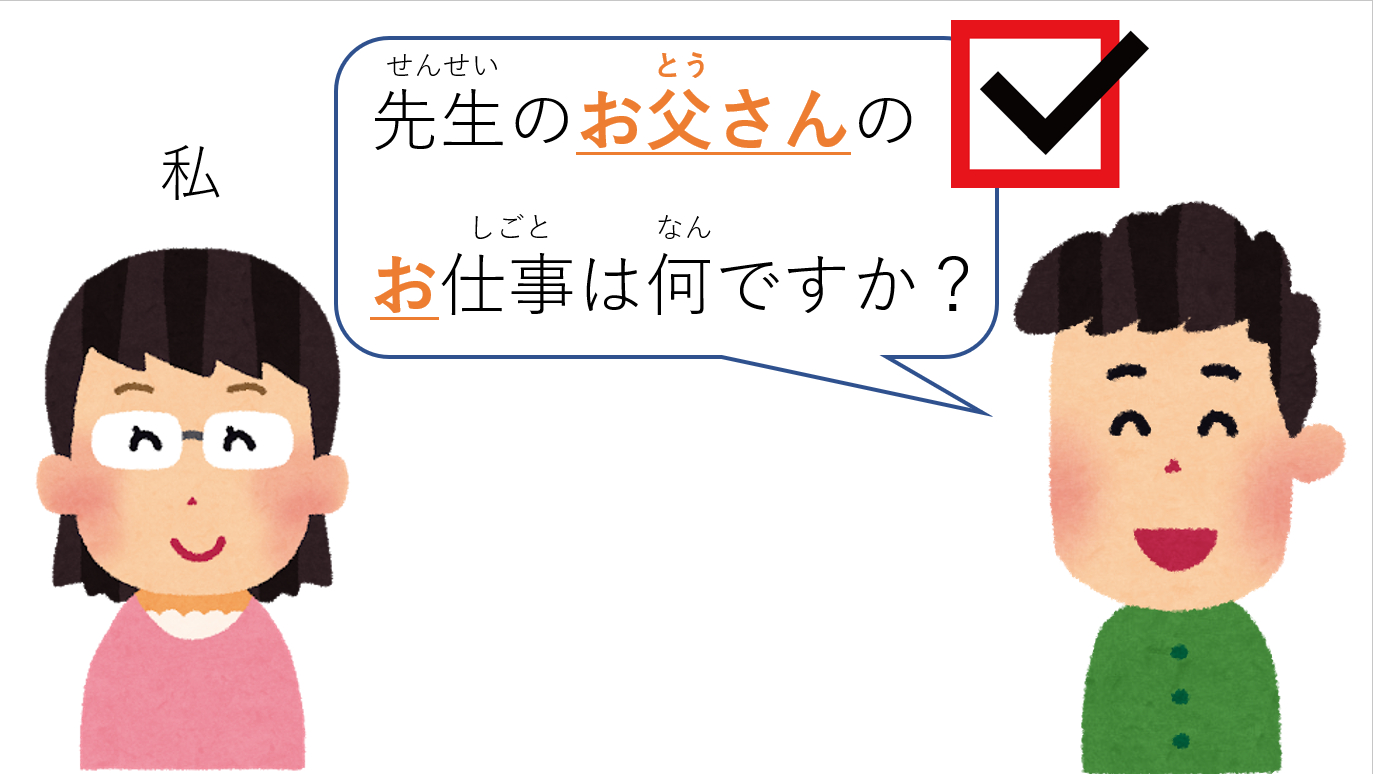
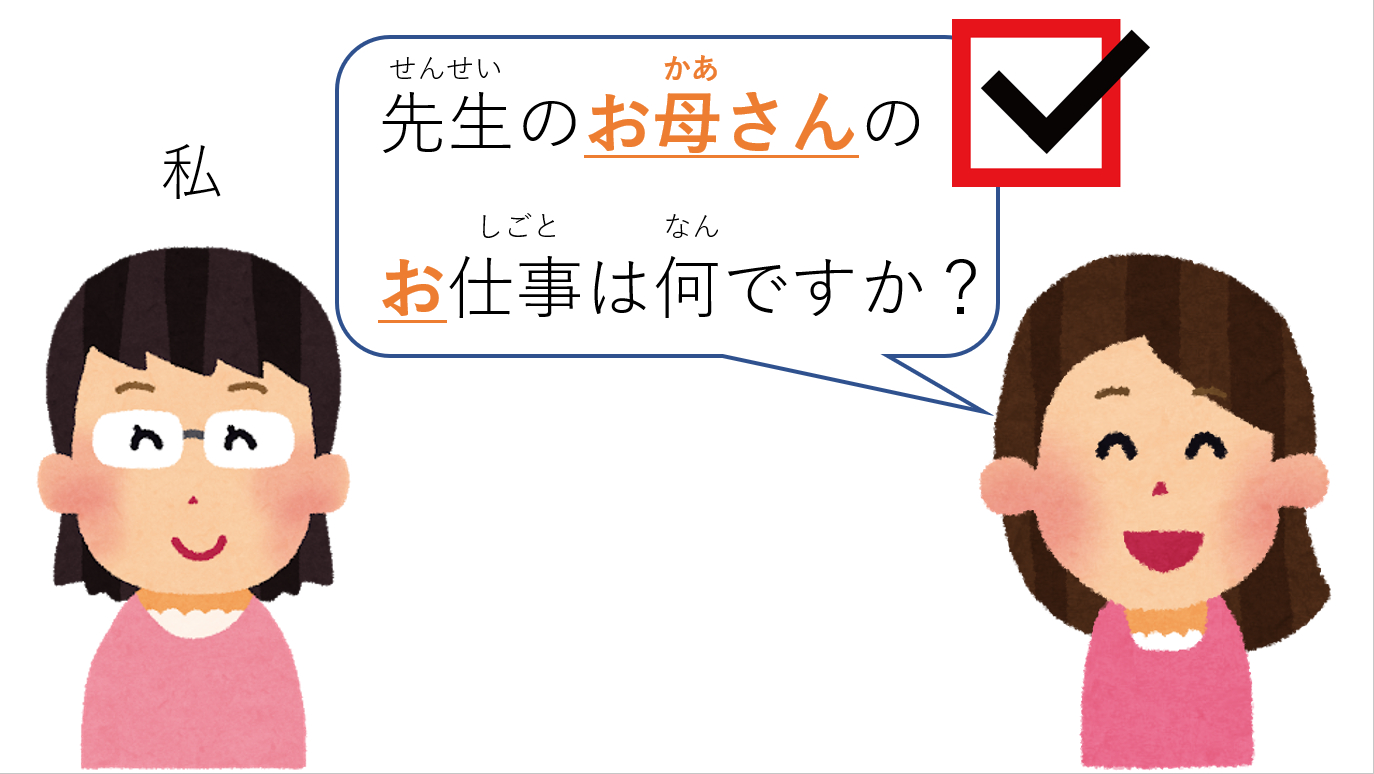
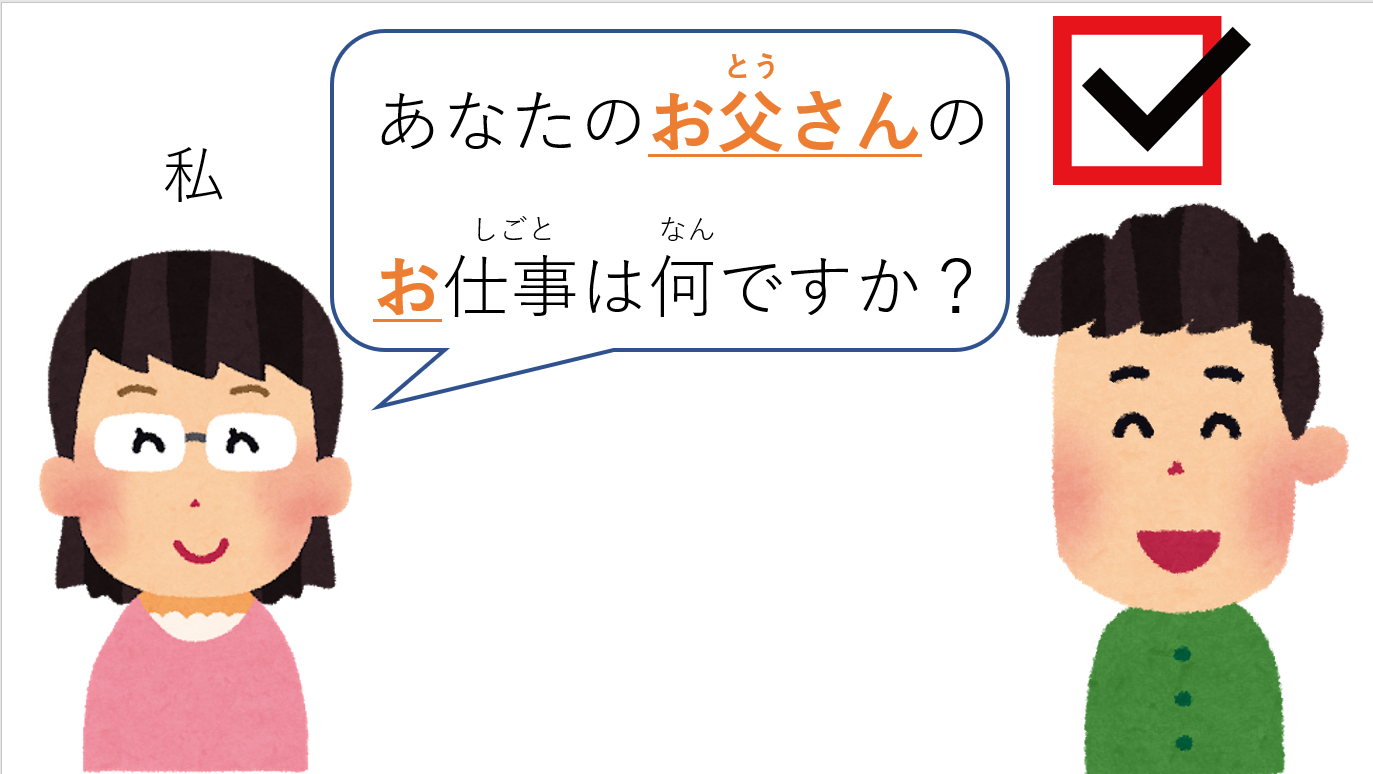
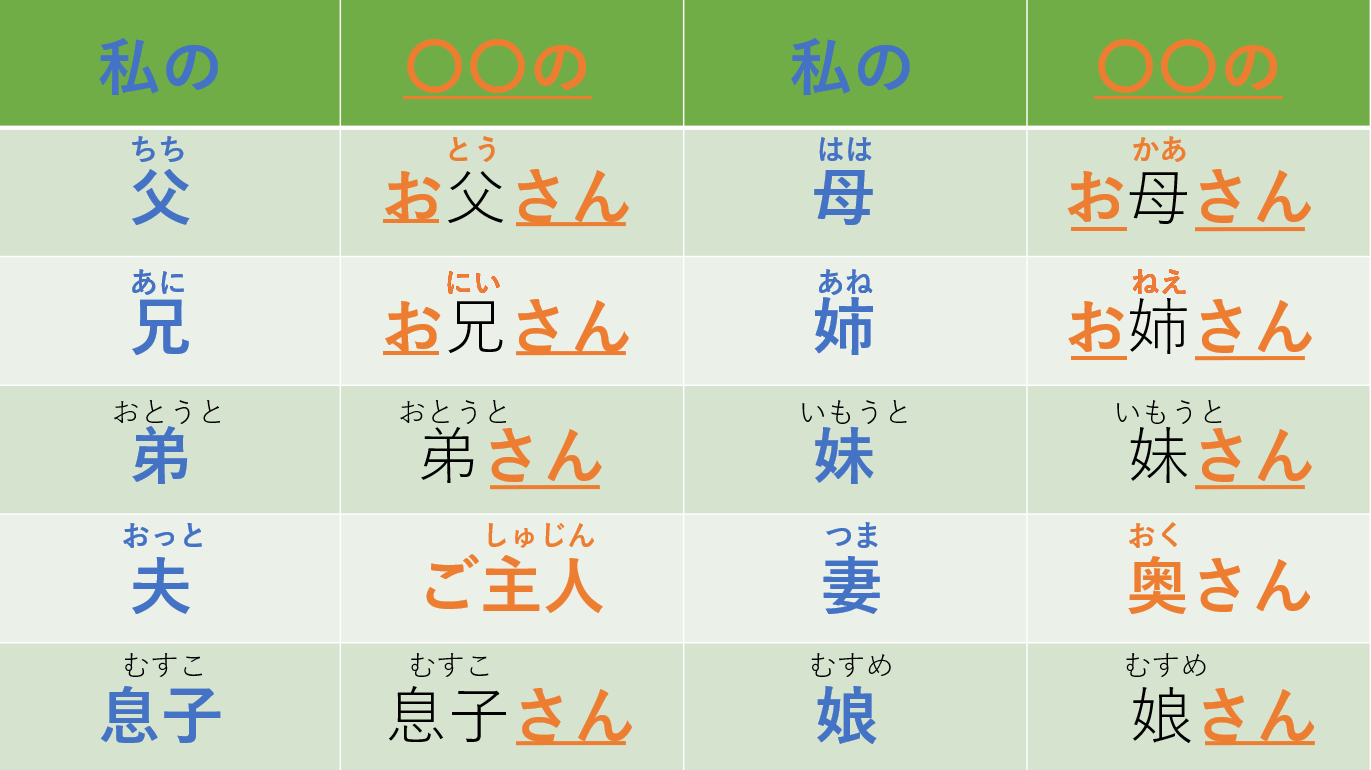
The correct answer is 「先生の【お父さん】の【お仕事】は何ですか?」.
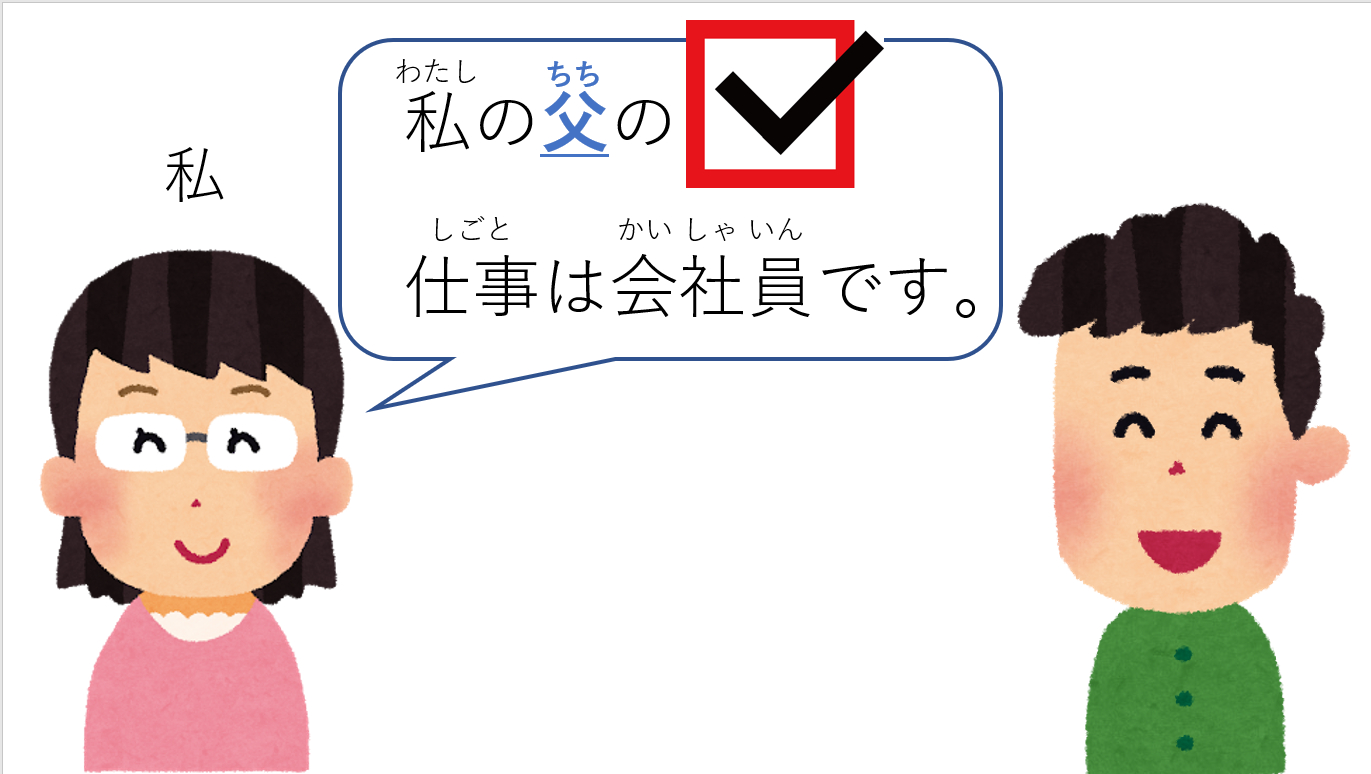
However, when 【I】speak, it's correct to say 「私の【父(ちち)】の【仕事】は会社員(かいしゃいん)です」.
Why is it a correct answer?
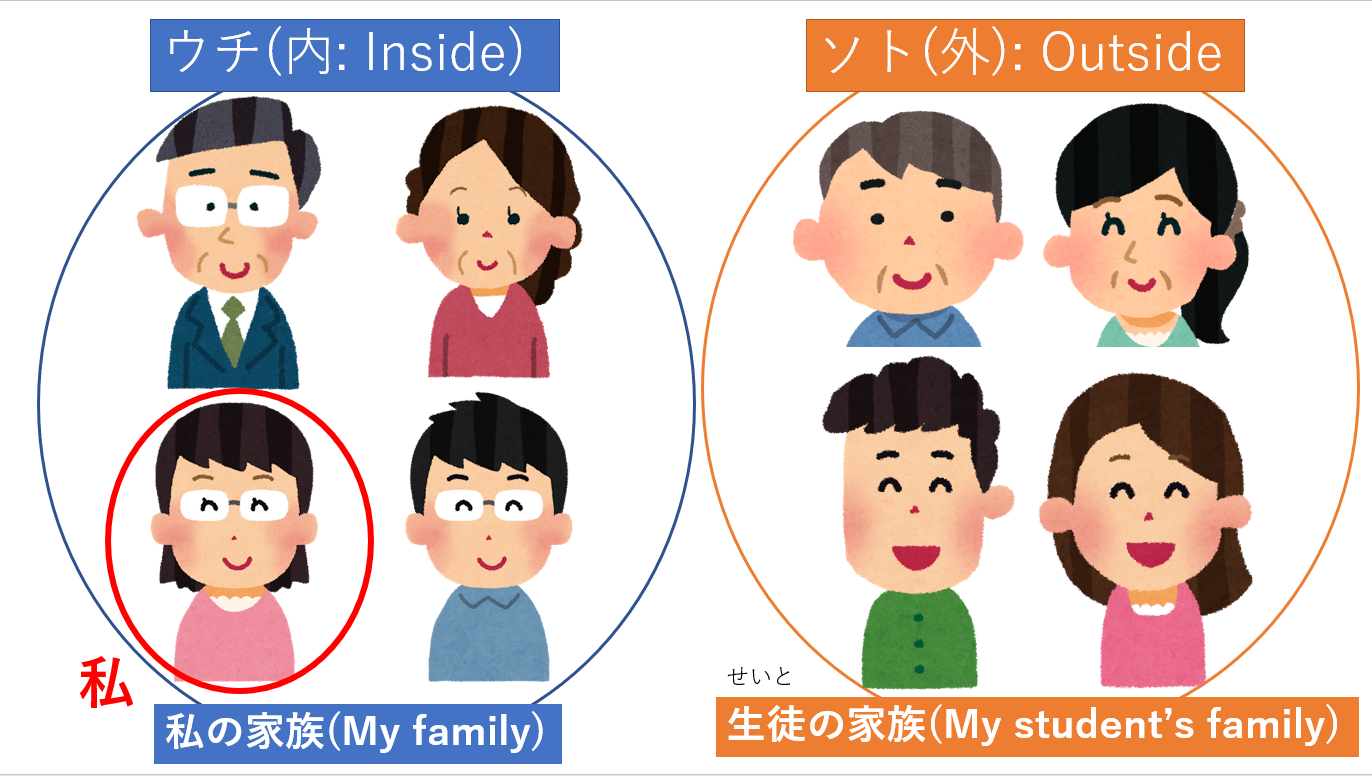
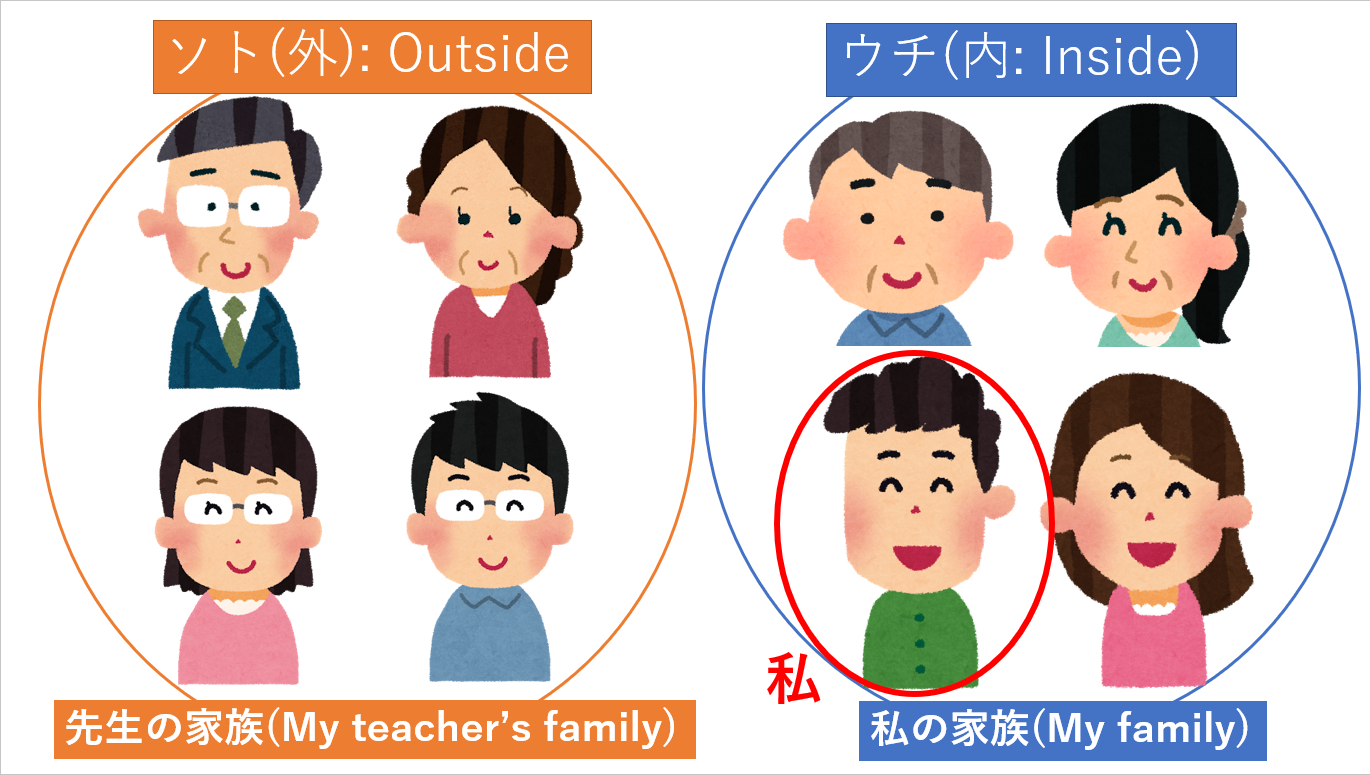
The reason why is that 【my father】is "Uchi", the person who is inside of my family for 【me】, and for the boy, he is the person who is outside of his family!!
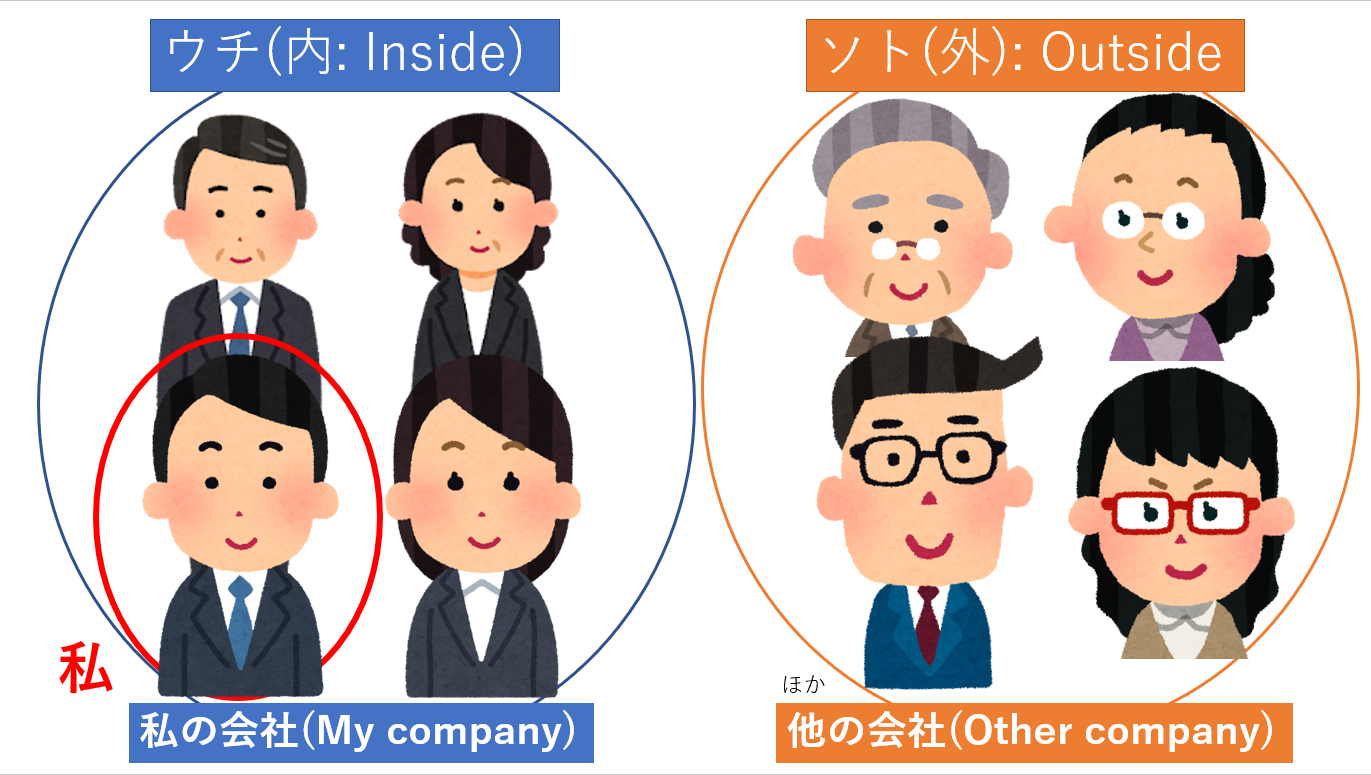
"Uchi" is "Inside", and "Soto" is "Outside".
In other words, the group which 【I】belong to is "Uchi", and the group which 【I】don't belong to is "Soto".
For the people who belong to "Uchi" group, we don't use a polite expression.
However, for the people who belong to "Soto" group, we have to use a polite expression!!
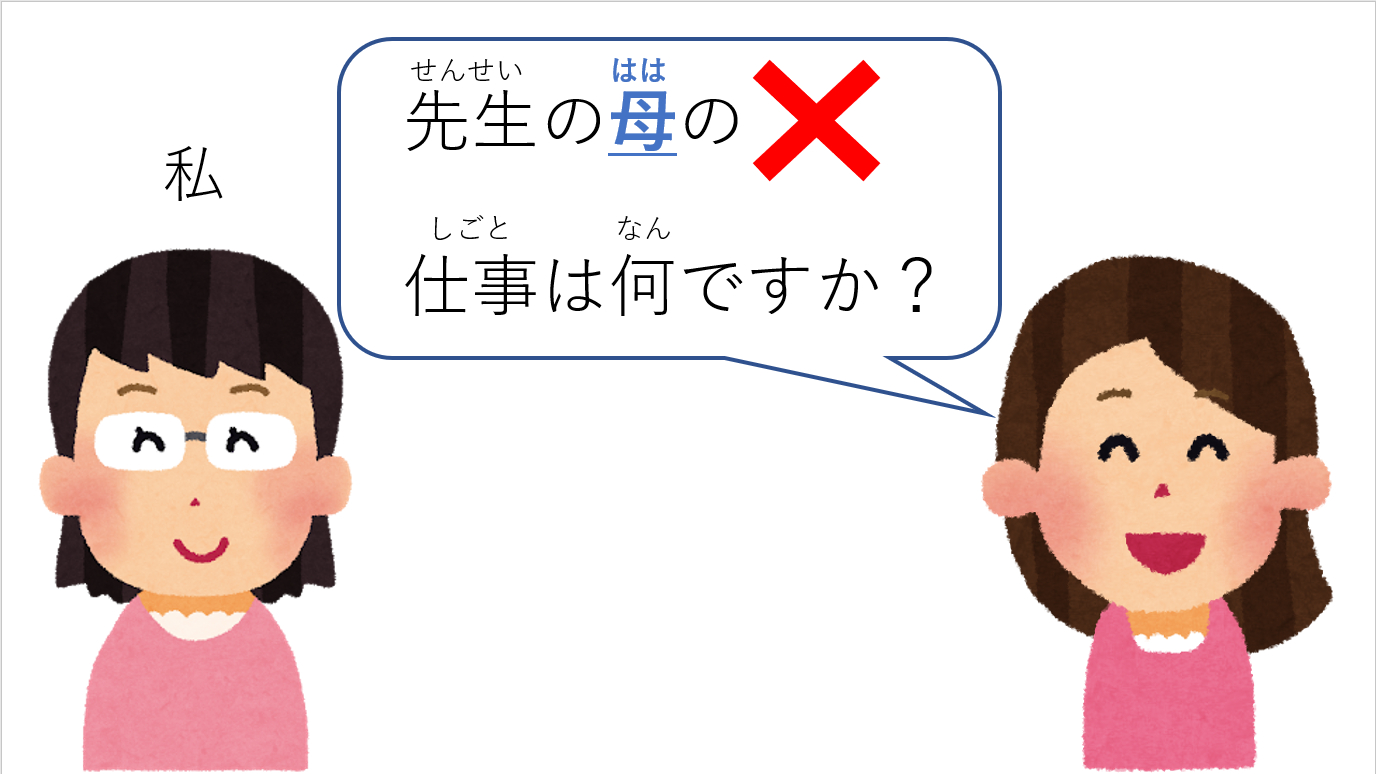
That's why we have to say 「先生の【お父さん】」, not 「先生の【父】」.
If we put 「お」or「ご」before words like 「父」or「仕事」, it will be a polite expression.
And, for a person, it will be polite to put「さん」at the last.
Likewise, it's correct to say「先生の【お母さん】の【お仕事】」, not「先生の【母】の【仕事】」, and
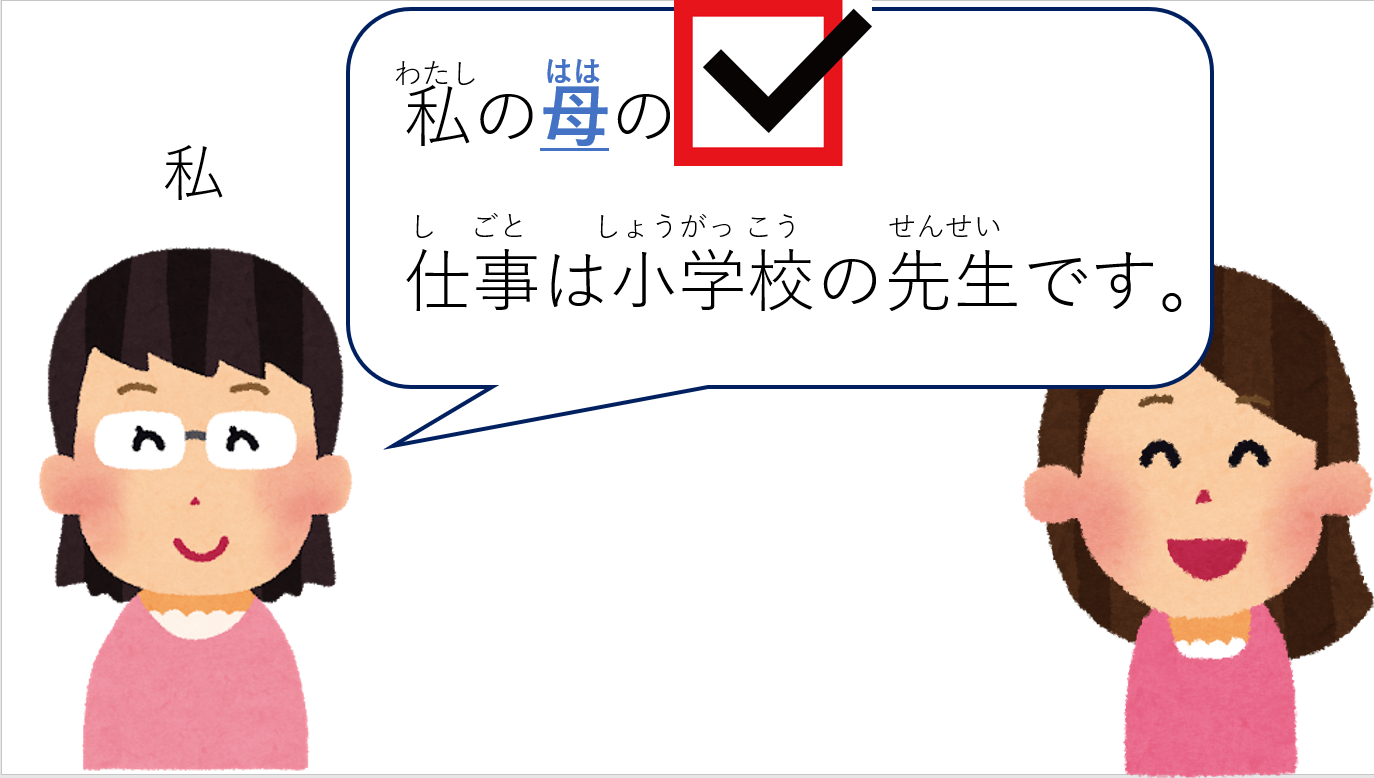
It's correct answer to say 「私の【母】の【仕事】は小学校の先生です。」.
In the same way, because【The father of the boy】is the person who belongs to "Soto" group for 【me】, 【I】have to say 「あなたのお父さん」, not「あなたの父」.
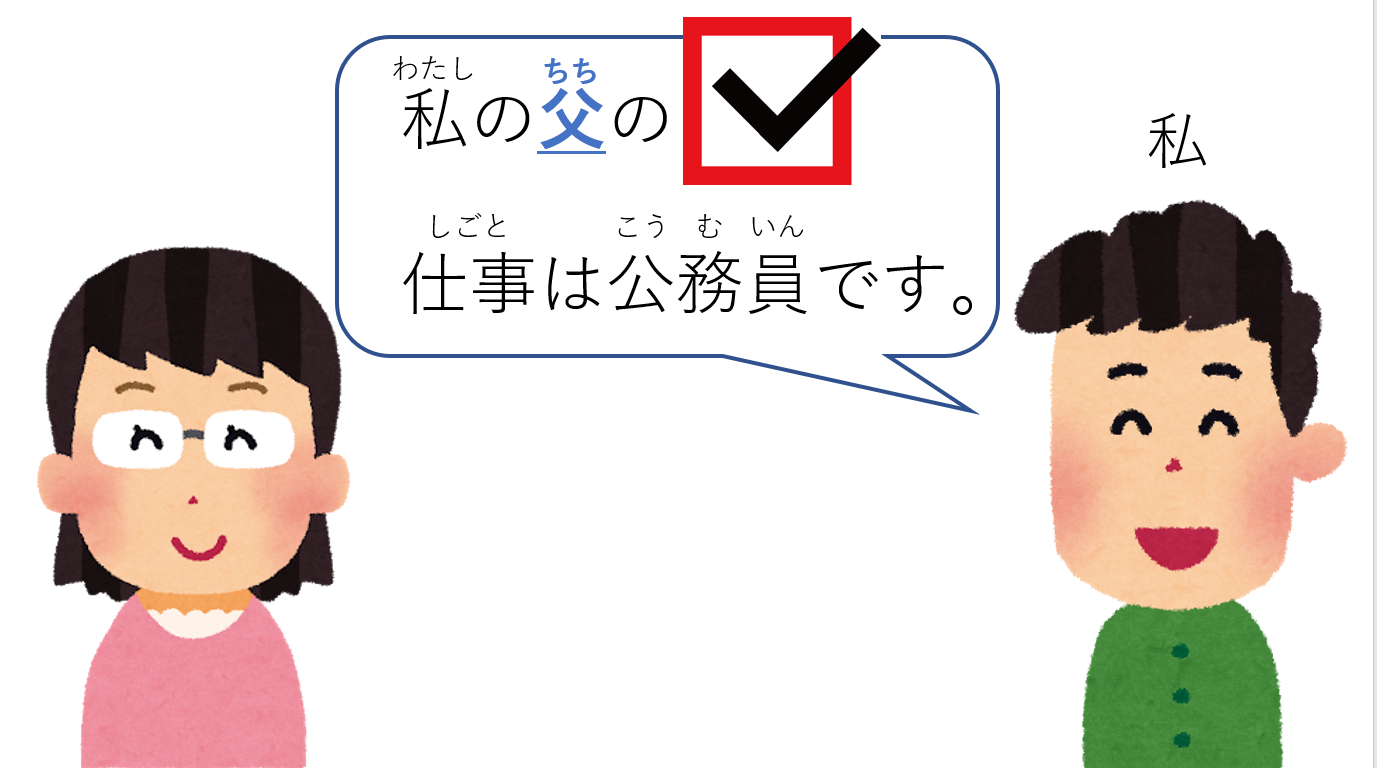
But, 【The father of the boy】is the person who belongs to "Uchi" group for 【him】,
it's the correct answer to say 「私の【父】の【仕事】は公務員(こうむいん)です。」.
*「公務員」is a public service worker.
Additionally, there are the expressions for other members of a family.
*「兄」is an elder brother, 「弟」is a younger brother, 「姉」is an elder sister, 「妹」is a younger sister, 「夫」is a husband, 「妻」is a wife, 「息子」is a son, 「娘」is a daughter.
-In the case of a company
Then, the concept of "Uchi" and "Soto" is applied to companies.
Same as the case of a family, the group which 【I】belong to is "Uchi"; so the people who are working in the same company belong to "Uchi".
And, the people who are working in the other companies belong to "Soto".
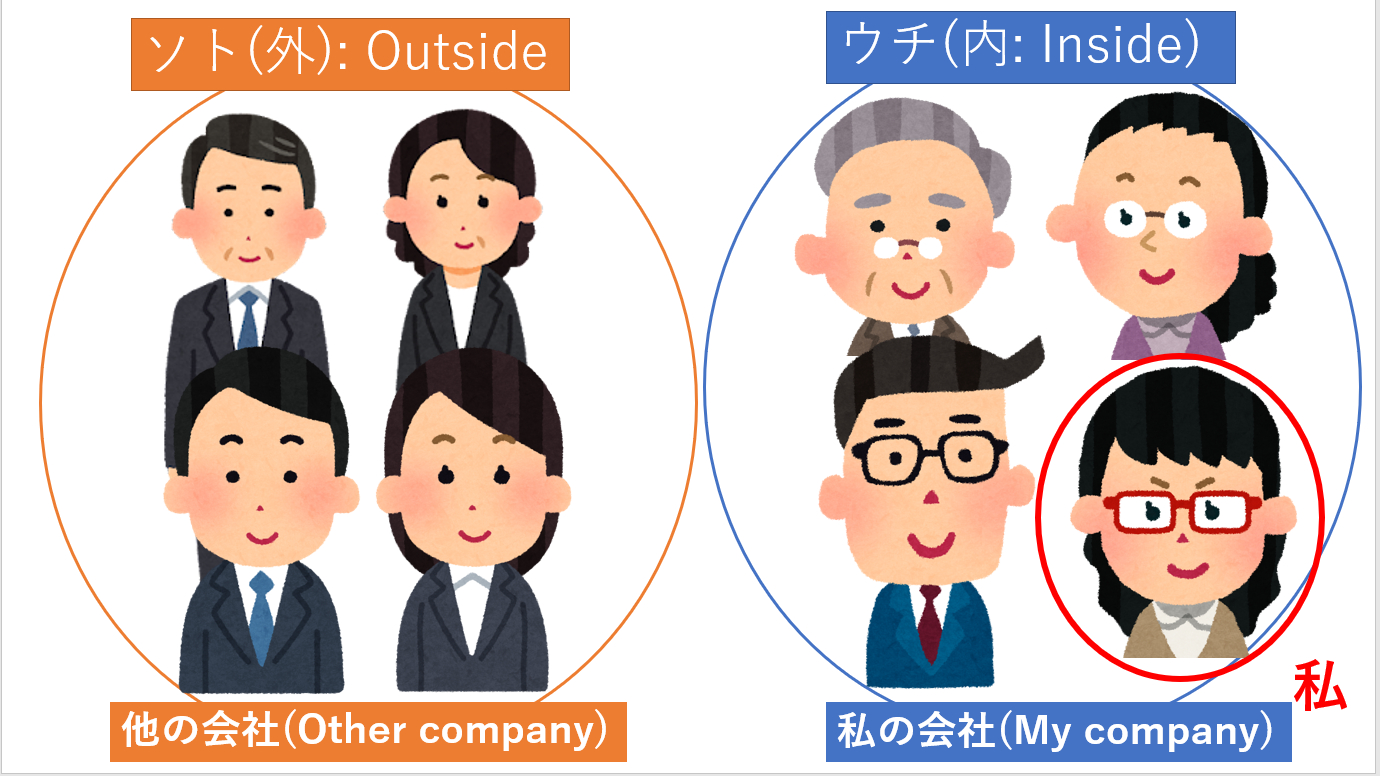
And it's the same if the place is opposite.
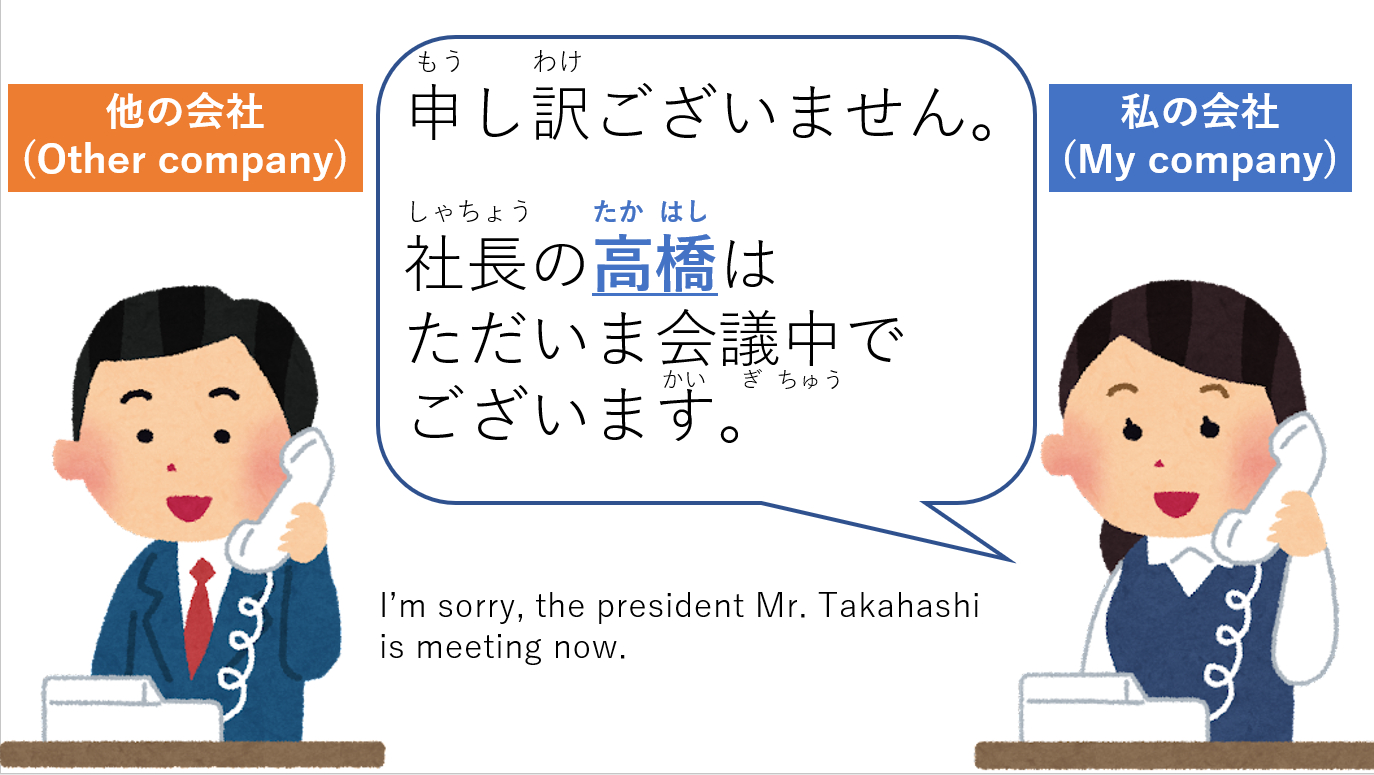
Anyway, let's read the example of the conversation in an office.
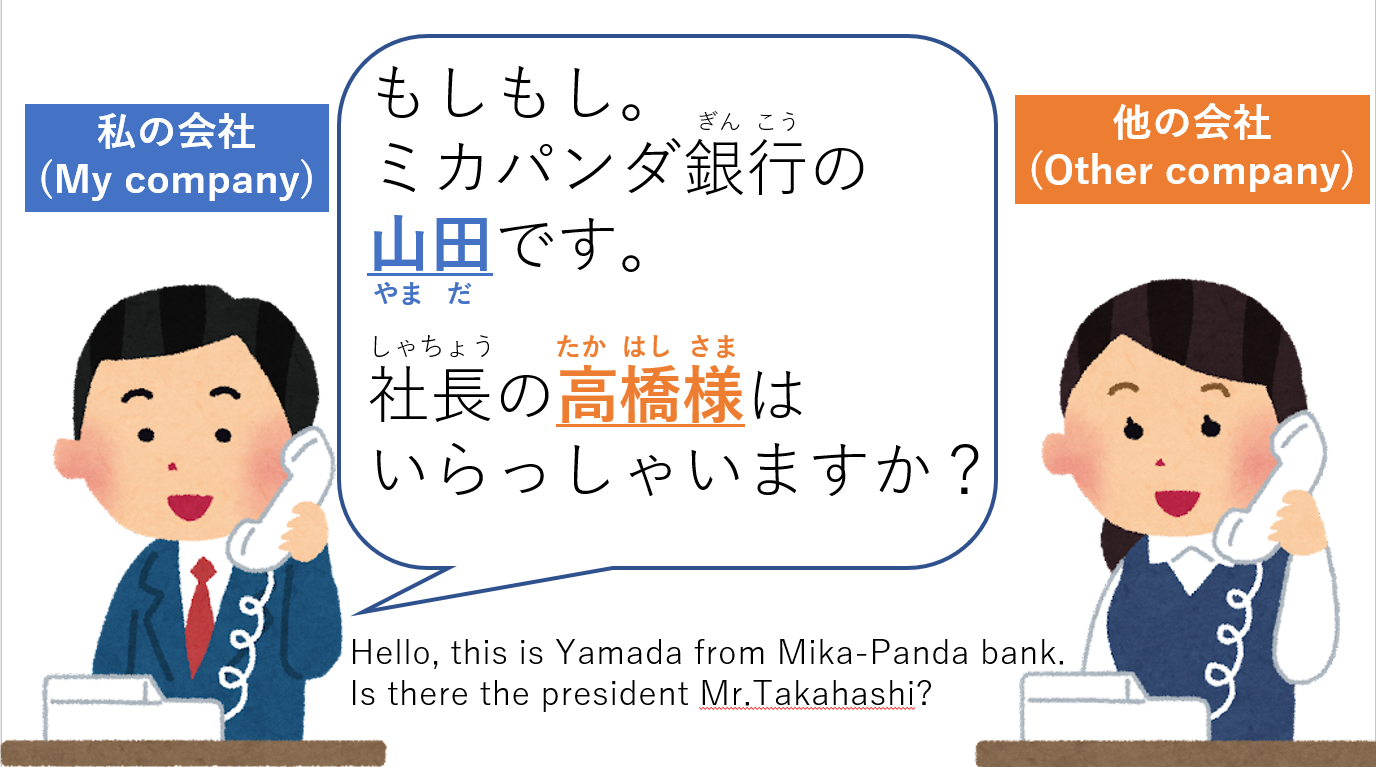
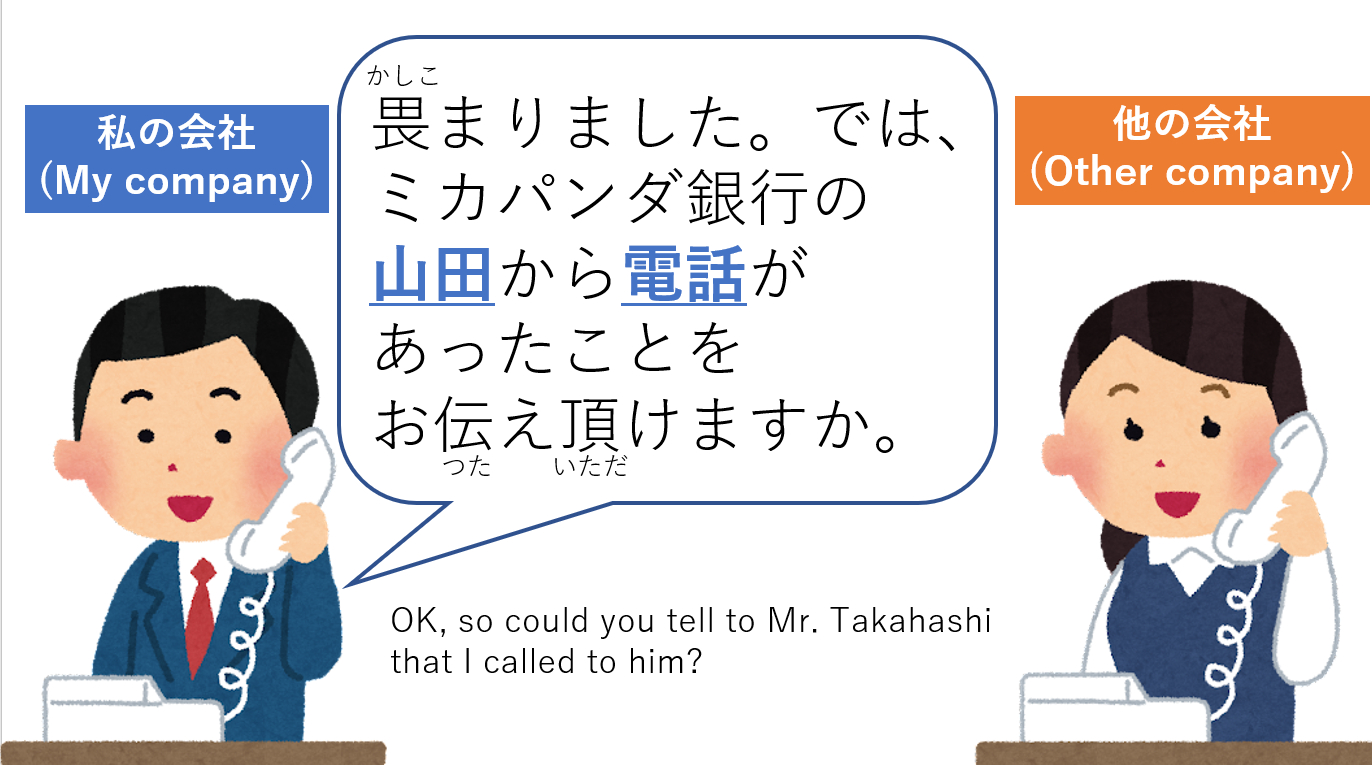
For instance, when you call to an other company, you must not put「さん」after your name.
Because you are the person of "Uchi".
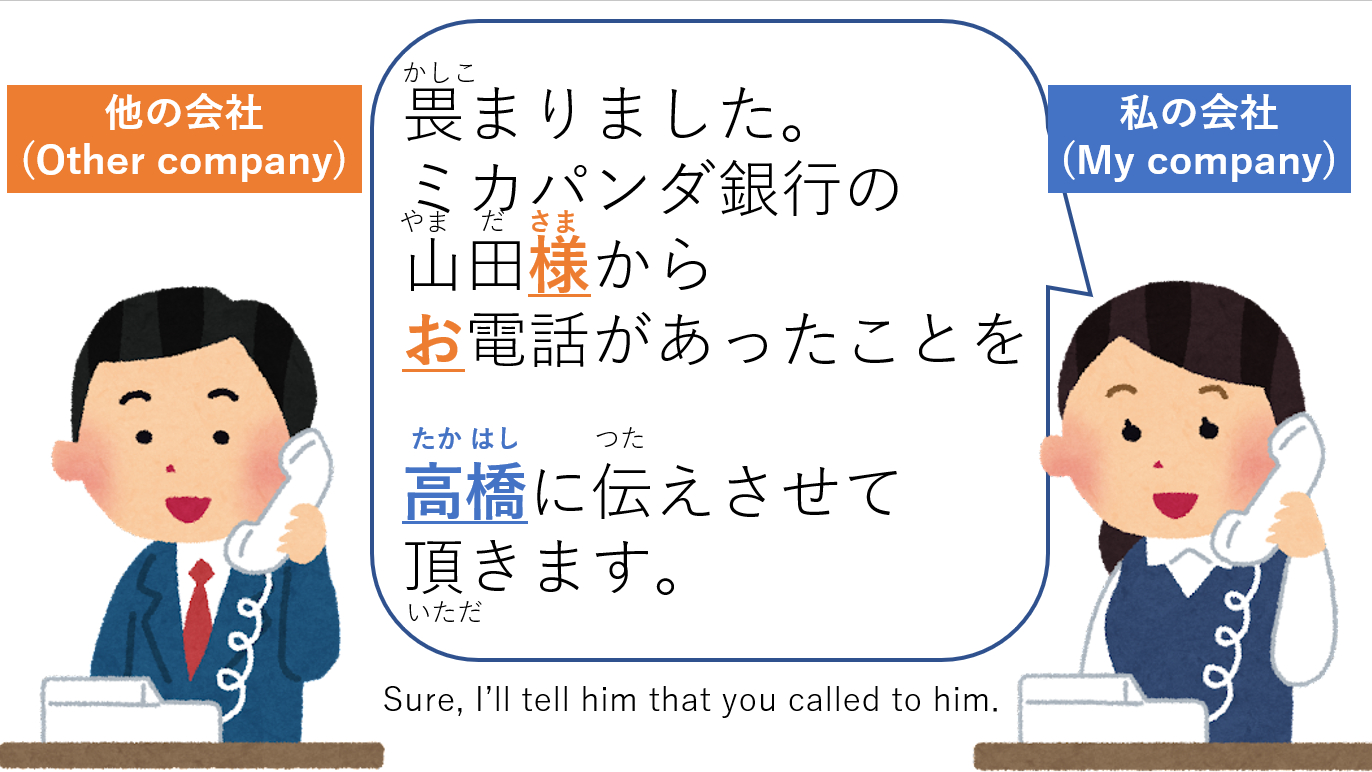
And, at the end of the name of other company's persons and customers or cliants, you have to put 「様」. Because they are the persons of "Soto".
Incidentally,「~様」is politer than「~さん」. While we're working, we use 「~様」 for the person who belong to "Soto".
And, of course the president is the boss of her, but he belongs to "Uchi" group of her, that's why she says just his family name「高橋」, not 「高橋さん」or「高橋様」.
「畏(かしこ)まりました」means "All right.", it's politer than「わかりました」.
He says "Yamada from Mika-Panda bank" again, and「電話」, not 「【お】電話」.
However, Mr.Yamada is the person of "Soto" group for her, it's correct to say 「山田【様】」and「【お】電話」.
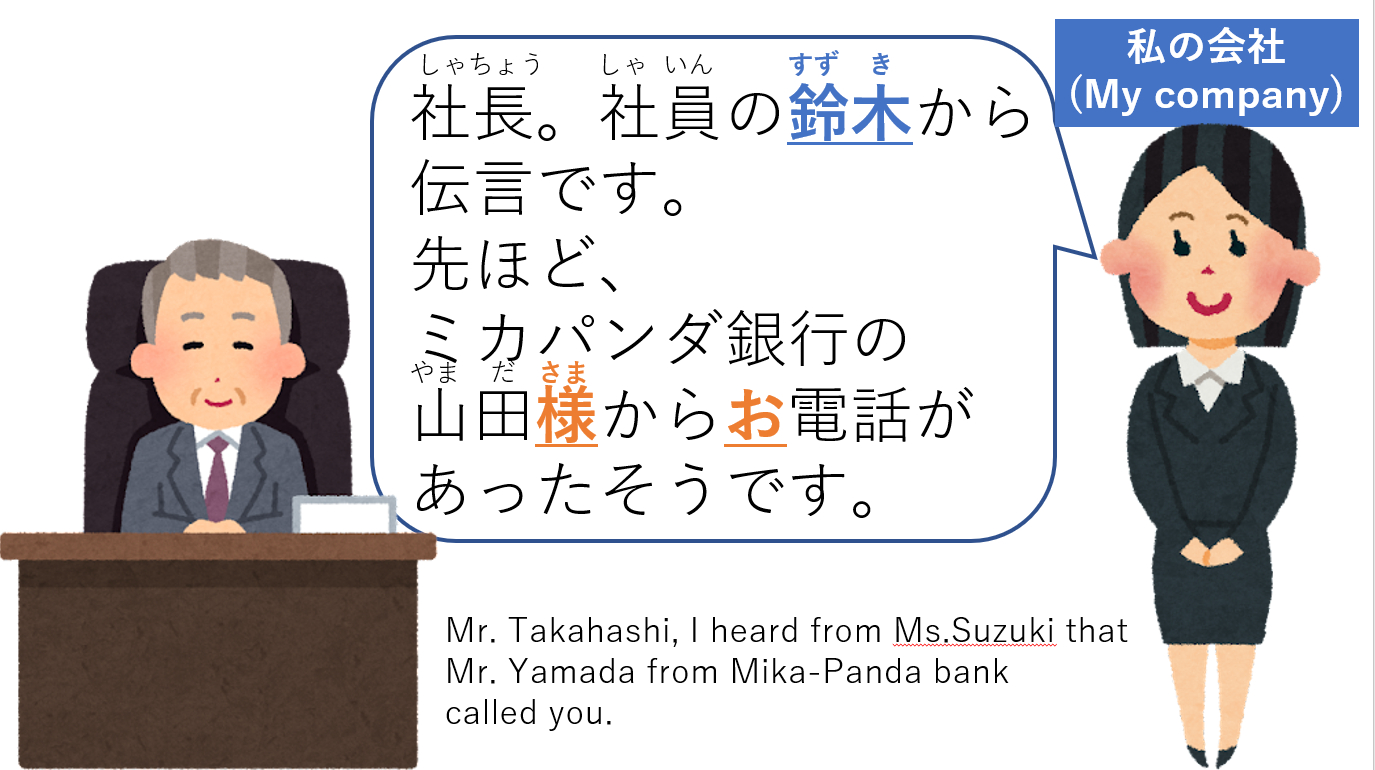
Then, the secretary heard by the woman who was calling with Mr.Yamada that he wants to call to the president, and she tells it to him.
By the way, who is「社員の鈴木(すずき)」?
The answer is the woman who was calling with Mr.Yamada, because she is the person of "Uchi" for the secretary. That's why she doesn't say「鈴木さん」.
【Final comment】
-Why do we have that concept?
How was it? You think it's too complicate to understand, don't you?
However, especially for the case of working in Japanese company, it's a required skill like the example of a conversation, so practice more and more!!
By the way, why Japanese have the concept "Uchi" and "Soto"?
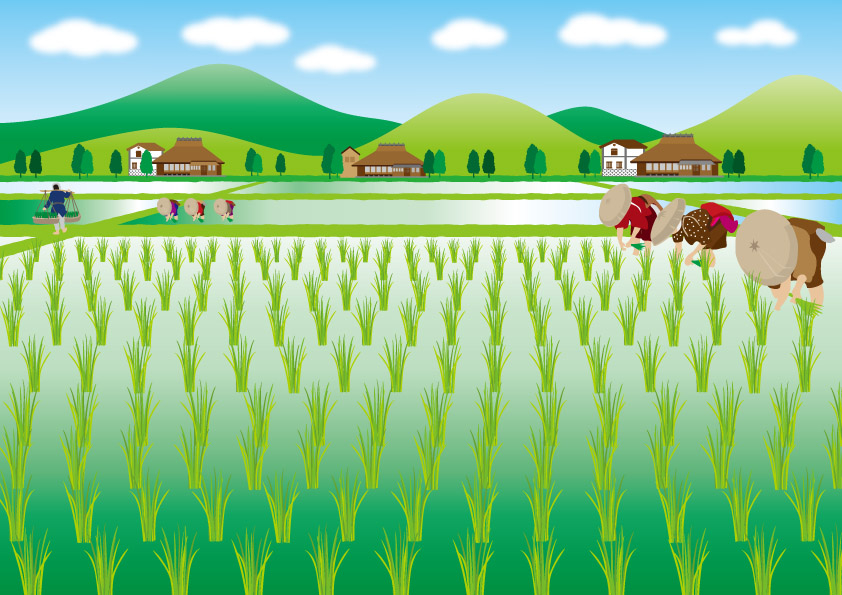
There are many opinions to answer, but the most believed one is Japanese people had been an agricultural tribe.
We had baced on the comunity as a farming village, and helped each other to live, that's why the concept of "Uchi"; the same member of the farming village had been established.
After that, we had recognized the people who come from outside of the village are "Soto".
-The influence of "Uchi" and "Soto"
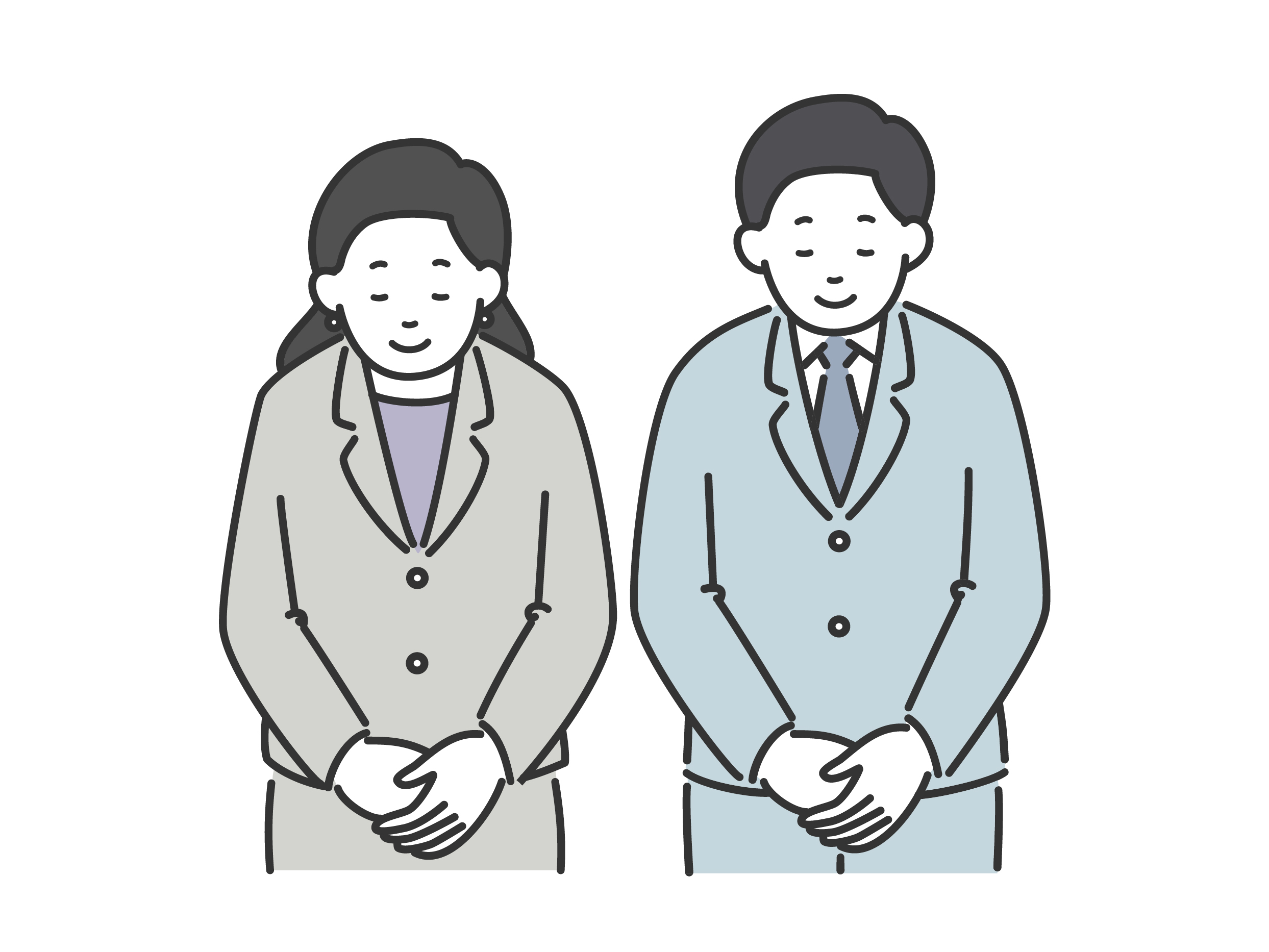
As you've read, the concept of "Uchi" and "Soto" has gave to Japanese the way of thinking that we must respect the people of "Soto".
However, sometimes that concept makes the thought of a discrimination, it's very disappointing for me.
But, the concept of "Uchi" and "Soto" also makes the idea that "We sould be modesty, and polite for other people"; it's not a bad thing.
Although it makes Japanese more difficult for you, it's possible to use it naturally if you get used to that. Just practice step by step!