(本ブログでは海外ニュースを参考に、英検ライティングのテーマ対策に役立つオリジナル英文を掲載しています。)
Overtourism has become a serious global issue. While European cities like Venice are trying to reduce tourist numbers through visitor caps, Japan cannot easily follow the same path because of its shrinking population and economic dependence on tourism. In the 2010s, the Japanese government promoted tourism to stimulate its stagnant economy. However, this policy has also created unintended negative consequences.
オーバーツーリズムは世界的な課題となっており、欧州では観光客数を制限する動きが進んでいる。一方、日本は人口減少と観光依存のため、単純に観光客を減らす政策を取りにくく、2010年代の観光振興策が新たな副作用も生んでいる。
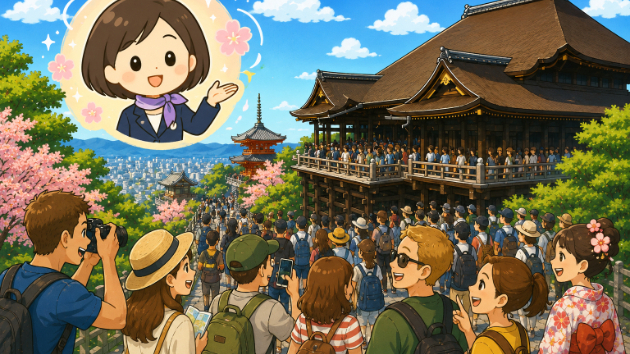
The core problem is not the total number of visitors, but two distinct types of concentration. First, social media algorithms concentrate millions of travelers into identical, photogenic locations. Japan’s traditional Omotenashi culture developed under relatively predictable customer flows, making it difficult to cope with sudden crowds driven by the internet. Second, Japan suffers from severe time concentration. During fixed holiday periods such as Golden Week, domestic holidaymakers and international tourists crowd into the same places.
問題の本質は観光客の総数ではなく、「空間的集中」と「時間的集中」にある。SNSは人々を同じ映えスポットへ集め、さらにゴールデンウィークのような大型連休が混雑を一段と深刻化させ、日本のおもてなし文化もこうした急激な人流変化への対応を難しくしている。
To address these forms of concentration, Japan needs policies that influence not only infrastructure but also traveler behavior. One emerging solution is dual pricing, in which non-residents pay higher fees for entry or public transit. This system is not merely a revenue tool but also a behavioral incentive. By creating economic pressure, it encourages travelers to reconsider when and where they visit, potentially easing congestion.
この集中を緩和するには、インフラ整備だけでなく、人々の行動そのものを変える政策が必要である。二重価格制度は、訪問時期や訪問先を見直させる行動変容の仕組みとして、混雑緩和に役立つ可能性がある。
In conclusion, solving overtourism requires modifying human behavior. The true key to a solution may lie not in reducing the number of visitors, but in dispersing tourism demand across different times and places.
オーバーツーリズムの解決には、観光客数を減らすことよりも、観光需要を時間的・地理的に分散させることが重要である。真の課題は人数そのものではなく、人が同じ場所に同じタイミングで集中することにある。
(233 words)
Key Vocabulary
visitor cap 入場者数制限、観光客数制限
shrinking population 減少する人口
stimulate (ˈstɪmjəleɪt)【動】刺激する、活性化する
stagnant (ˈstæɡnənt)【形】停滞した、低迷した
unintended (ˌʌnɪnˈtɛndɪd)【形】意図しない、予期しない
consequence (ˈkɑːnsɪkwəns)【名】結果、影響
identical (aɪˈdɛntɪkəl)【形】同一の、まったく同じ
photogenic (ˌfoʊtəˈdʒɛnɪk)【形】写真映えする
concentration (ˌkɑːnsənˈtreɪʃən)【名】集中、集積
holidaymaker (ˈhɑːlədeɪˌmeɪkər)【名】旅行者、休暇客
crowd into ~ 大勢で~に押し寄せる
dual pricing 二重価格制度
public transit 公共交通機関
behavioral incentive 行動変容を促すインセンティブ
reconsider (ˌriːkənˈsɪdər)【動】再考する、見直す
lie in ~ ~にある、本質が~にある
disperse (dɪˈspɜːrs)【動】分散させる、散らす
Useful Expressions
Japan cannot easily follow the same path because of ~
~のため、日本は簡単に同じ対応を取れない
promote tourism to stimulate its stagnant economy
停滞した経済を活性化させるために観光を促進する
create unintended negative consequences
意図しない負の影響をもたらす
The core problem is not the total number of visitors, but ~
問題の本質は、旅行者の総数ではなく~である
cope with sudden crowds driven by the internet
インターネットによって急増した人の流れに対処する
Japan suffers from severe time concentration
日本では人の移動が特定の時期に極端に集中する
encourage travelers to reconsider when and where they visit
旅行者に、いつどこを訪れるかを見直させる
The true key to a solution may lie in ~
真の解決の鍵は~にあるかもしれない
Note
個人的には、日本のオーバーツーリズム問題は以前より少し複雑になっているように感じます。
最近は、観光シーズンでなくてもインバウンドの勢いが続いており、円安もその流れに拍車をかけています。地方への分散は少しずつ進んでいる一方で、京都のような一部の人気観光地では依然として混雑が解消されていません。
結局のところ、問題は観光客の総数そのものではなく、「どこに、いつ集中するか」なのかもしれませんね。
【英検準1級 英作文診断のご案内】
「書いてみたけれど、論点がずれていないか不安」
「英語として自然か見てほしい」
という方は、ぜひ英作文診断をご利用ください。
内容・構成・語彙・文法の4観点から、改善点をわかりやすくお伝えします。




.png)